
The Tech Takeover: When Silicon Valley Buys Fashion’s Biggest Night

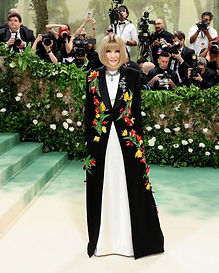

The week leading up to the Met Gala has always carried a certain theatrical hum—but this year, it felt less like a crescendo and more like a controlled detonation.
A Week Dressed for Spectacle
There was the state visit of King Charles III to the United States—a diplomatic affair recast, inevitably, as a fashion moment. There were the global premieres of The Devil Wears Prada 2, where every step onto the carpet felt like a referendum on relevance. And in Biarritz, Chanel staged a Cruise show that reminded the industry, with characteristic restraint, what heritage still looks like when executed properly.
Behind the scenes, stylists like Micaela Erlanger, Erin Walsh, and Jessica Paster were working with surgical precision, dressing their clients not just for cameras, but for cultural memory. It was fashion at full tilt—polished, relentless, impeccably curated.
And yet, for all its spectacle, it felt like foreplay.
The Steps That Still Matter
Because on Monday, everything—or at least everything that insists on calling itself important—will converge on the steps of the Metropolitan Museum of Art. The Met Gala, under the unwavering gaze of Anna Wintour, remains fashion’s most mythologized stage.
This year’s dress code, Fashion Is Art, reads like a course correction—a gentle but pointed insistence that fashion be taken seriously again. Craft. History. Cultural resonance. The things the industry claims to value when it isn’t busy chasing virality.
But beneath the official narrative runs a far more revealing undercurrent.
The Tech Gala
The 2026 gala has already been quietly rechristened the “Tech Gala,” a phrase popularized by Amy Odell—and it’s difficult to argue with her.
The evening is reportedly underwritten by Jeff Bezos and Lauren Sánchez Bezos, a pairing that feels less like sponsorship and more like a symbolic transfer of power. Fashion, long sustained by its own ecosystem of designers, editors, and legacy houses, now finds itself increasingly financed by Silicon Valley. The economics tell the story with brutal clarity: $350,000 for a table. $100,000 for a single ticket—up sharply from $75,000 just a year ago. For many fashion brands, even established ones, the Met Gala has quietly slipped from aspirational marketing expense to outright impossibility.
For Meta, OpenAI, or Amazon, however, the calculus is different. When your balance sheet operates in the language of billions, a Met table isn’t a risk—it’s a rounding error.
When Patronage Changes, So Does Power
To be clear, this isn’t new. Tech has been orbiting fashion’s inner sanctums for years. Amazon helped underwrite the gala as early as 2012. Instagram, Apple, and Yahoo have all written their checks. But what was once peripheral now feels central. The guest list has shifted, subtly but unmistakably, from those who create culture to those who capitalize on it.
The logic, as Odell suggests, is almost clinical: tech needs access to a female audience. The Met Gala offers cultural cachet at scale. One ticket, one table, one carefully orchestrated appearance—and suddenly, relevance.
Fashion’s Most Visible Stage—Or Its Most Expensive Illusion
The gala has always been more than a fundraiser, even if it exists to support the Costume Institute’s exhibitions. It is fashion’s grandest act of self-definition—a place where designers, editors, and performers collaborate to produce moments that transcend commerce. Or at least, it was.
When entry becomes so prohibitively expensive that even the brands shaping fashion’s visual language are priced out, the equation changes. The concern isn’t merely aesthetic—though one could fairly argue that Silicon Valley has yet to demonstrate any consistent fluency in style. It’s philosophical.
Fashion is, at its core, a conversation. A negotiation between creators and the culture they dress. If the room increasingly fills with those who consume rather than contribute, what happens to that conversation?
The Death of the Invisible Billionaire
Once upon a time, Silicon Valley’s power was deliberately understated—hoodies, denim, the quiet arrogance of those who didn’t need to perform wealth because they controlled it. Their influence was systemic, not visual. Fashion, by contrast, has always been spectacle. It thrives on visibility, symbolism, and the carefully constructed illusion of effortlessness. That boundary has now dissolved. Wealth is no longer backstage—it’s front row. And increasingly, wealth means tech.
A Fragile Hope
And yet, despite the noise, the theatrics, the creeping corporatization, the Met Gala still produces moments that remind us why it matters.
A silhouette that reframes the body.
A designer-celebrity pairing that feels like alchemy.
A gesture—small, precise, undeniable—that cuts through the spectacle.
Those moments still exist. For now. The question is whether they can survive in a room where fashion is no longer spoken fluently, but merely acquired. Because when only tech companies can afford entry to fashion’s most important night, the message becomes impossible to ignore: Fashion is no longer funding itself. It is being funded. And that distinction—quiet, almost imperceptible—is the kind that changes everything. AM