
Guerlain Resurrects L'Heure Bleue: A 114-Year-Old Fragrance Gets Its Modern Reimagining
August 27, 2026
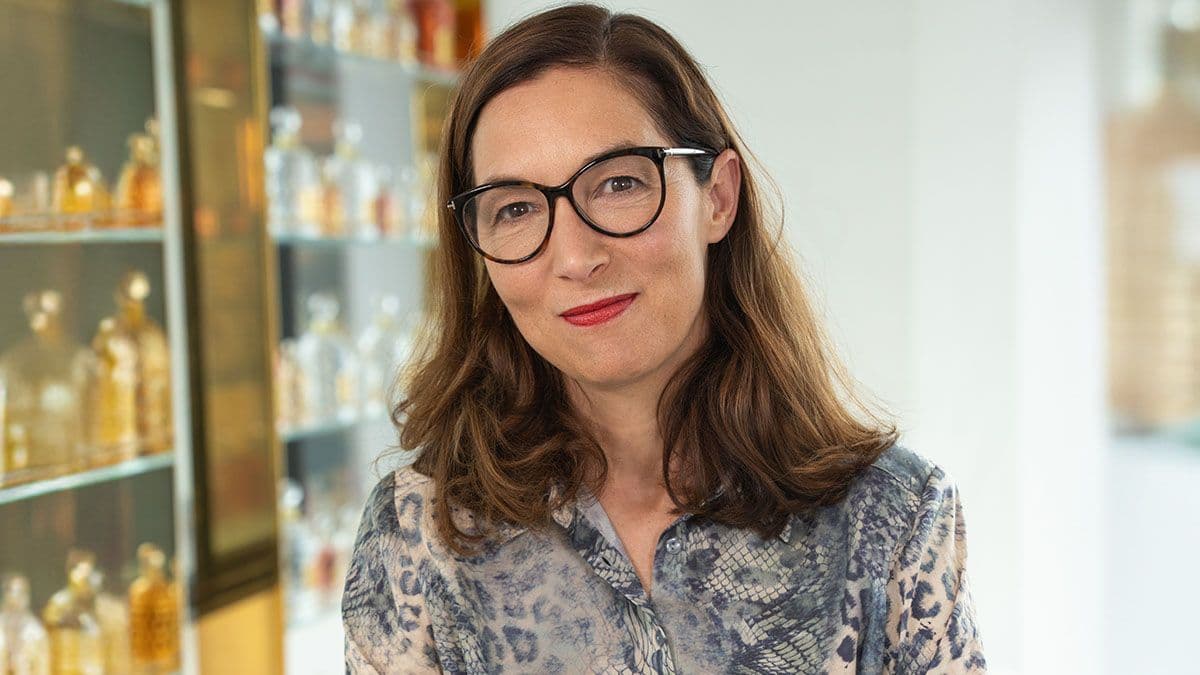
The debut of a refreshed L'Heure Bleue represents Guerlain's most significant women's fragrance introduction in nearly a decade, arriving after the launch of Mon Guerlain back in 2017. According to CEO Gabrielle Saint-Genis, the house operates according to a different timeline. "We take our time at Guerlain, waiting until we have something truly meaningful to offer the world," she explains. "When you're a house that has been passionate about fragrance for 200 years, you are obsessed with innovating. And in this particular case, we wanted to pay tribute to this extraordinary creation by Jacques Guerlain."
The new L'Heure Bleue draws inspiration from a foundational piece of Guerlain's legacy: a fragrance that Jacques Guerlain composed in 1912 and continues to be sold in its original form today, though it remains one of the house's more obscure classical offerings. Saint-Genis recounts the origin story while speaking from her office near the Pont Neuf in Paris. "He created L'Heure Bleue after an immense emotional experience one evening while crossing the Pont Neuf, right there," she says, gesturing toward the historic bridge visible from her window with its commanding Parisian vista.
The inspiration behind the fragrance stems from a specific atmospheric phenomenon. "He witnessed the blue hour — a suspended moment when the whole atmosphere is bathed in blue, creating a feeling of immense peace. It's also a moment when plants and flowers release their most beautiful fragrances," Saint-Genis continues. "He was fascinated by the beauty of the scene. Afterward, he spent two years trying to recreate it. Jacques was an artist, and perfume was his way of expressing himself — capturing through fragrance this extraordinary moment he had experienced."
The contemporary iteration comes courtesy of Delphine Jelk, who holds the position of director of perfume creation at the house. Saint-Genis explains: "Delphine started with a question: if Jacques Guerlain were here today, with access to the full olfactory palette now available to perfumers, how would he create what we call the 'fragrance of the sky'?" The resulting composition features characteristics that lean toward the aquatic realm. According to the CEO, Jelk achieved "a slightly marine, salty, ozonic character created through Cascalone". In another innovation — a world first — Jelk developed a proprietary iris tincture, resulting in an iris note that possesses "a luminous, light, and crystalline" quality.
The worldwide rollout of the new L'Heure Bleue commences on Friday, following an earlier introduction in the Chinese market earlier this month. Rather than replacing the original, both iterations will coexist in the Guerlain portfolio. Saint-Genis clarifies the distinction: "We're going to cherish [the first L'Heure Bleue] like a treasure. The only difference is that it will be called L'Heure Bleue 1912, which is Jacques Guerlain's creation, and the new L'Heure Bleue, which is Delphine Jelk's creation. Rather than inventing perfumes from scratch, we find it interesting to look back at our heritage. I think we're living in an era where there's a certain need to hold on to something solid."
The pricing structure reflects the house's strategy to position the fragrance as broadly accessible within the luxury segment. The new L'Heure Bleue retails for €169 for the 100ml bottle, €122 for 50ml, and €86 for the 30ml option. Saint-Genis emphasizes the deliberate choice to include a smaller format below the €100 threshold. "We wanted — and needed — a global flagship [fragrance] that would be 'accessible'. That's why it comes in 30ml at less than €100," she notes. For comparison, L'Heure Bleue 1912 in eau de parfum form carries a price tag of €147 for 75ml.
The CEO articulates the brand's philosophy regarding luxury and accessibility: "Fragrance can go very far at Guerlain when it comes to sophistication. That said, our vision — and my vision, in particular — is that Guerlain is not a house of elitist exclusivity. What we wanted to do was really offer the exceptional quality of Guerlain at those prices."
Guerlain's lineage traces back to 1828, when Jacques's grandfather, Pierre-François-Pascal Guerlain, established the esteemed French perfume house. The family maintained control until 1994, when a controlling stake passed to LVMH. Financial details regarding the house's individual performance remain undisclosed by the luxury conglomerate, though the perfumes and cosmetics division as a whole generated €8.2 billion in 2025. Industry analysts estimate Guerlain contributes somewhere between €1.2 billion and €1.5 billion annually, while rival Parfums Christian Dior is calculated at approximately €3.9 billion. The remainder derives from other division properties including Maison Francis Kurkdjian, Acqua di Parma, Parfums Givenchy, Kenzo Parfums, Loewe Perfumes, Make Up For Ever, and Benefit. The division experienced a 1% sales decline during the second quarter of 2026, with LVMH's chief financial officer attributing this to a commitment to selective retail channels and underperformance in travel retail sectors. However, LVMH's Q2 earnings statement highlighted that Guerlain specifically demonstrated robust expansion.
Leveraging its storied past serves an additional strategic function: reinforcing the brand's authority in fragrance creation at a moment when the competitive landscape is becoming increasingly saturated. According to financial sector analyst Pierre Tegnér of Oddo BHF, the market dynamics favor such a move. "The fragrance market is tending to polarize between accessible prestige and very high-priced, ultra-premium collections," Tegnér observes. "Launching a mainstream fragrance can help respond to this trend while also testing the brand's legitimacy at this price point." The accessible prestige category presents formidable competition, particularly from L'Oréal Luxe holdings such as Lancôme, Valentino, Prada, and Yves Saint Laurent.
Simultaneously, Guerlain maintains commanding strength in the ultra-premium echelon of the market. The house's L'Art & La Matière collection, identified as its fastest-expanding fragrance line, carries pricing of €335 for 100ml, escalating to €550 for 50ml variants within its Les Extraits subdivision.
Fragrance operations constitute the company's principal growth vector, expanding at double-digit percentage rates according to Saint-Genis, whose professional background includes positions at Parfums Christian Dior and a tenure as CEO of Make Up For Ever prior to assuming leadership at Guerlain in 2023. Skincare currently represents the largest category by volume, though Saint-Genis projects it will achieve parity with fragrance in terms of revenue proportions in the near term. The organization operates fewer than 100 retail boutiques and approximately 50 spa locations worldwide, but Saint-Genis dismisses any urgency toward expansion. "Guerlain is a very high-end house. I think we need to convey a sense of rarity."
Geographic expansion focuses particularly on the United States as a growth opportunity, coinciding with a deliberate reduction in Asia's disproportionate contribution to revenues. Saint-Genis notes that four years prior, the combined markets of Mainland China, Hong Kong, and Asian travel retail channels represented more than half of total business; this proportion has now diminished to approximately one-third.
Emerging fragrance delivery systems, including body mists and similar formats, have energized the broader industry, yet Saint-Genis indicates that L'Heure Bleue need not rush to adopt such innovations. She does, however, recognize commercial potential in the growing consumer practice of fragrance layering and blending. "But you can't layer just anything. For example, if you layer L'Heure Bleue with Mitsouko, it doesn't work. On the other hand, Les Extraits are extraordinary layering tools. Typically, in store, if you like L'Heure Bleue, our sales advisors can explain that pairing it with the Vanille Planifolia Extrait 21 extract, or the Iris Pallida Extrait 6 extract is absolutely beautiful."
The prevailing strategy emphasizes the transformation of heritage into contemporary relevance. Saint-Genis articulates this philosophy: "When you manage to transform tradition into modernity, it really resonates with what young people are looking for right now. It's an obvious point of differentiation. Who else has 200 years of history in fragrance? So yes, looking at what has been extraordinary in our 200 years of history — there are a lot of people who are going to be interested in that." AM