
Country Music Legend Dolly Parton Dies at 80 Following Cancer Battle
August 26, 2026 · John Enot
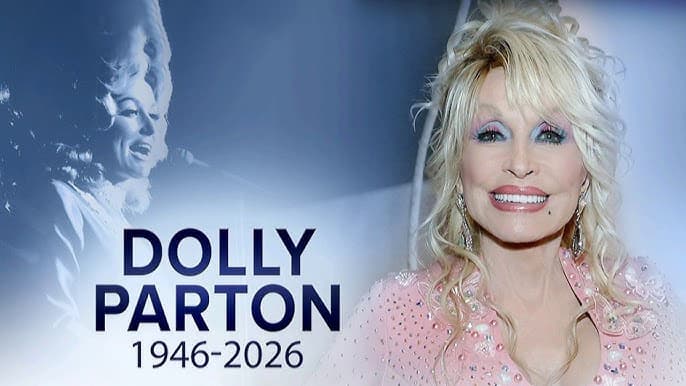
Dolly Parton, who rose from a one-room Tennessee cabin to the pinnacle of American music and entertainment, died Tuesday at Vanderbilt-Ingram Cancer Center in Nashville. She was 80. Family representatives confirmed her passing was peaceful, and a small, intimate service will be held for close relatives. Her publicist revealed that Parton succumbed after courageously fighting a brief bout with cancer.
In recent years, the legendary performer had been candid about various health struggles, particularly following the March 2025 death of her husband, Carl Dean. Parton acknowledged in a video message to fans earlier this year that she had neglected her own wellbeing during her husband's prolonged illness and after his passing. "Back when my husband Carl was very sick — that was for a long time — and then when he passed, I didn't take care of myself," she explained. "So I let a lot of things go that I should have been taking care of."
Parton's career as a songwriter spanned more than five decades. She composed more than 3,000 songs that chronicled love, heartbreak, and the human condition. "Coat of Many Colors" stands as a tender tribute to her mother's resourcefulness in their impoverished rural home. Ballads such as "Jolene" and "I Will Always Love You" became cultural touchstones, while "9 to 5"—the title track from the 1980 film in which she starred—emerged as an anthem for working women and the broader liberation movement.
Her recording career yielded 49 albums and 11 Grammy Awards, establishing her as one of country music's most successful crossover artists. Duets like "Islands in the Stream" with Kenny Rogers proved her ability to connect across musical genres and chart categories. Beyond music, Parton translated her enormous wealth into transformative philanthropy, creating a library initiative that has distributed over 300 million books to young readers worldwide.
Born January 19, 1946, in a one-room cabin, Parton was the fourth of twelve children in a family she described as "dirt poor." Her father was illiterate, yet music saturated the household through her mother's lineage—her maternal grandfather was a preacher and accomplished musician. Parton received her first guitar from an uncle at childhood and mastered it by age seven, already composing original material. She marveled at her own ability to write emotionally resonant lyrics about experiences she had merely overheard discussed among adults.
Moving to Nashville after secondary school, Parton encountered Carl Thomas Dean outside a laundromat on her arrival day. She later reflected on how his genuine interest in understanding her character—rather than merely appraising her appearance—made an immediate impression. They married in 1966, the year after she secured her initial recording contract with Monument Records.
Her ascent accelerated when she joined "The Porter Wagoner Show" in 1967, a televised country variety program that made her nationally recognized. Her first number-one single, "Joshua," arrived in 1971, the same year "Coat of Many Colors" climbed to number four. After seven years of performing alongside Wagoner, Parton determined it was time for independence. With "I Will Always Love You" as her declaration of intent, she pursued a solo career that would prove nearly unparalleled in American music history.
Crucial to this transition was Parton's foresight at age 20 in establishing a publishing venture with her uncle Bill Owens, which she controlled. This arrangement granted her influence over her artistic output that few entertainers—and fewer women—possessed in that era. When Elvis Presley's manager Colonel Tom Parker wanted a stake in the publishing rights to "I Will Always Love You," Parton declined, protecting what she considered vital assets for her family's future. That decision proved prescient: when Whitney Houston's rendition became the love theme for 1992's "The Bodyguard," Parton netted approximately $10 million in royalties.
Her charisma and southern accent made her a natural performer. After a short-lived variety program bearing her name, Parton transitioned to cinema. Her 1980 film debut in "9 to 5," alongside Jane Fonda and Lily Tomlin, established her as a credible actress. Fonda, producing the project, had been struck by Parton's vocal performance of "Two Doors Down" on the radio and envisioned her alongside Tomlin and herself. Parton negotiated to compose and perform the theme song, which she created by tapping her acrylic nails—a sound that became iconic.
She returned to film in 1982's "The Best Little Whorehouse in Texas" with Burt Reynolds and achieved particular resonance in 1989's "Steel Magnolias," where her portrayal of beauty salon owner Truvy introduced her to admirers across generations, particularly within the LGBTQ+ community. Parton further expanded her artistic scope with "Travelin' Thru," a 2005 composition for "Transamerica" centering on a transgender woman's family reconciliation. The song earned her a second Academy Award nomination for best original song.
Parton maintained a consistent philosophy of acceptance despite pushback from conservative religious communities. "I'm so outspoken as far as just being accepting of people in general," she told Larry King in 2016. "I do not believe that we should criticize and judge other people, I think we should be accepting and loving. We are all God's children." When King inquired whether faith-based institutions objected to her stance, Parton acknowledged they regularly did.
Regarding feminist identity, Parton avoided formal labels while practicing feminist principles throughout her life. She permitted her songs and actions to articulate her values rather than explicit political declarations, remaining deliberately enigmatic about presidential preferences and party affiliation.
In 1986, Parton acquired a regional amusement park in Pigeon Forge, Tennessee, rebranding it Dollywood. The facility became the county's primary employer, generating approximately 23,000 jobs and contributing roughly $1.8 billion annually to the regional economy, according to a 2021 economic assessment. Additionally, Parton authored numerous bestselling works, encompassing memoirs, a co-written novel with James Patterson titled "Run Rose Run," and children's literature.
Industry recognition followed, including 1999 induction into the Country Music Hall of Fame and the Recording Academy's lifetime achievement honor in 2011. Initially reluctant about Rock and Roll Hall of Fame induction due to questioning her legitimacy within that genre, Parton ultimately recorded "Rockstar," collaborating with figures including Ringo Starr and Paul McCartney on reimagined classic rock selections.
Parallel to her entertainment empire, Parton's humanitarian endeavors expanded substantially. The Dollywood Foundation, launched two years after the theme park's opening, initially targeted high school completion rates in her home county before evolving into the Imagination Library, now among the world's foremost early literacy and book-distribution programs. Parton dedicated this initiative to her father's memory, attributing his unfulfilled potential to the fact that he did not know how to read. She additionally contributed significantly following natural disasters and committed $1 million to coronavirus research at Vanderbilt University, personally helping fund Moderna vaccine development during the pandemic.
Parton's marriage to Dean endured 59 years. Dean was notably absent from her spotlight for most of their marriage, yet their relationship remained strong. "The reason it's lasted is because we're not in each other's faces all the time," Parton explained to Entertainment Tonight in 2020. Dean's discreet encouragement of her career and absence of jealousy contributed fundamentally to their partnership's longevity.
Remarkably, Dean inadvertently inspired "Jolene" when a bank teller showed excessive interest in him during routine visits. Parton composed the song as a humorous acknowledgment of this recurring occurrence. Following Dean's death in March 2025 at age 82, Parton released "If You Hadn't Been There," a tribute capturing the emotional weight of losing a partner spanning nearly six decades. The song's lyrics reflected her gratitude: "If you hadn't been there, where would I be? Without your trust, love and belief." AM