
Inside Balmain's Transformation Under New Leadership
September 30, 2026
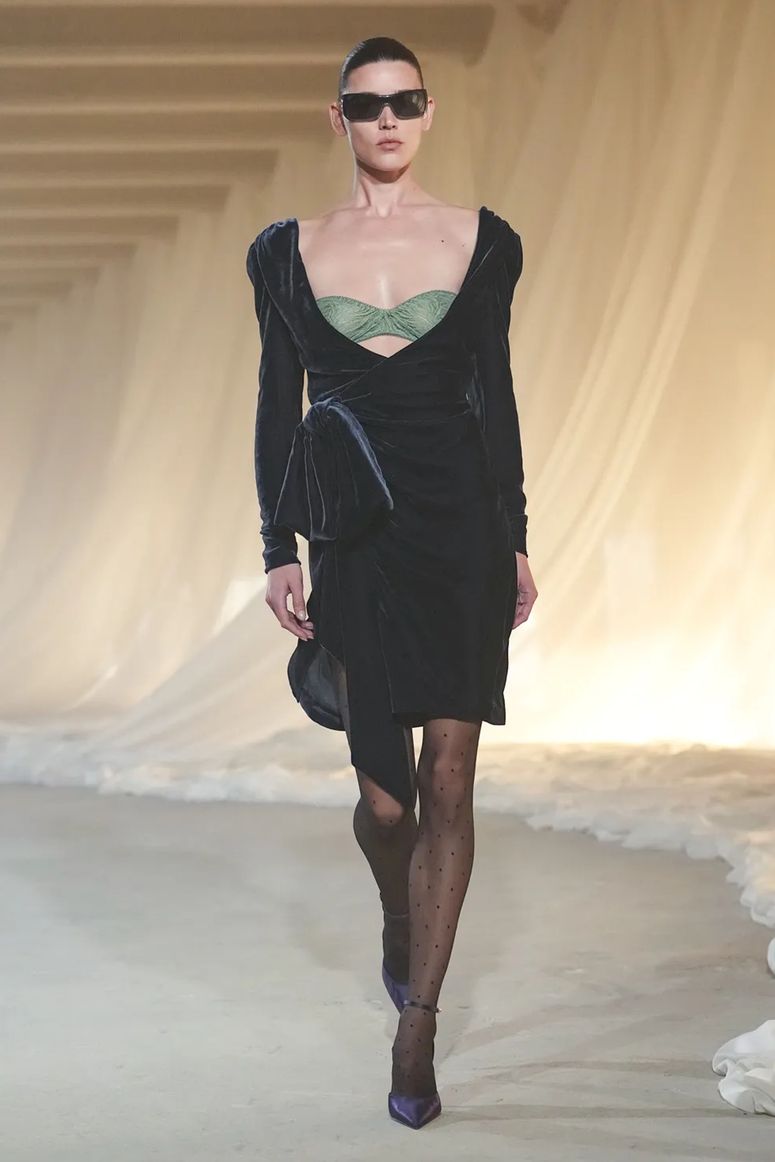
Just before the models started walking for Antonin Tron’s debut show for Balmain last season, the shutters opened, and the symbolism was hard to miss. Tron took the creative director chair, letting the light of a new day into the Parisian house.
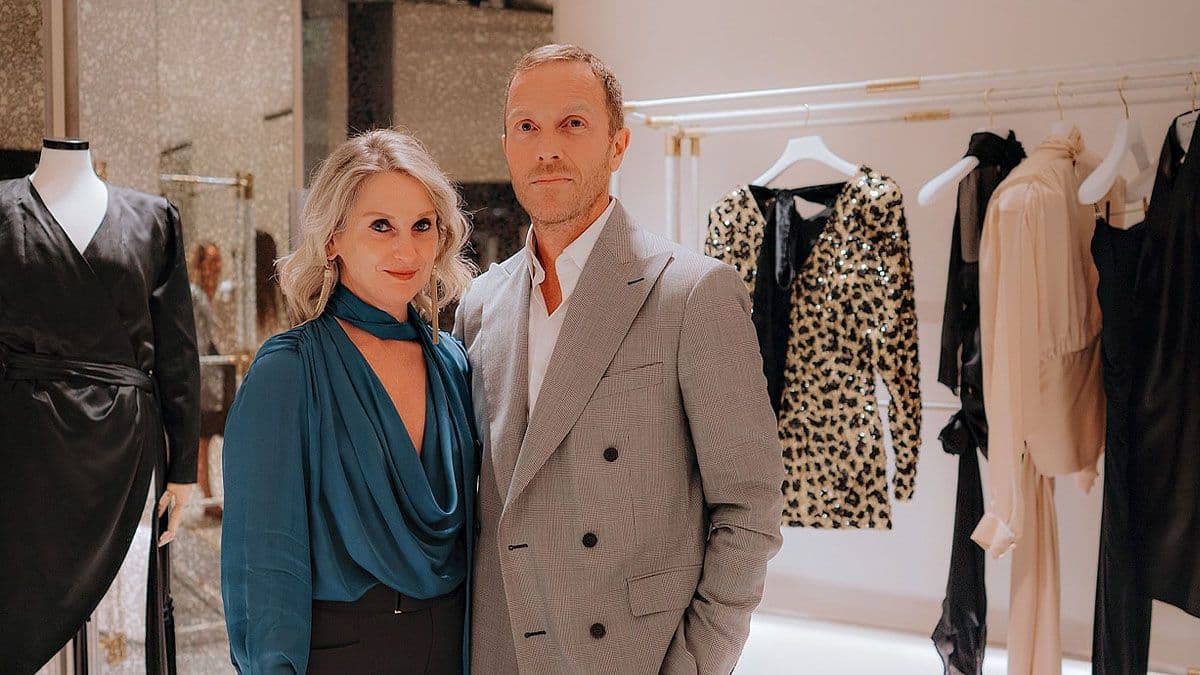
Yet Tron’s appointment was only a piece of the larger story. Behind the scenes, CEO Matteo Sgarbossa had been driving a thorough transformation of the Mayhoola-owned company since taking on the role in May 2024. Two months afterward, he brought on Bruna Scognamiglio as the new CMO, and later appointed Tron in November 2025, shortly following the departure of Olivier Rousteing, who had led the house for 14 years.
Balmain’s product lineup, retail spaces, pricing and communication approach have all been reworked by the pair together. Before tonight’s show, Matteo and Bruna spoke with us, sharing the inside story of Balmain’s transformation strategy.
Vogue: You both recently marked your two-year anniversary at Balmain. What do you consider your biggest moments so far?
Matteo: The year I joined as CEO happened to be our 80th anniversary — I took it as a sign. With a major anniversary like that, it made sense to pause and tell the brand's story, and I came to realize that Balmain's incredible story had never really been told. In prior years, the brand had been closely tied to its designer, and it needed to be able to stand on its own.
So we started what has become two years of full transformation at the maison, centering our strategy around two elements: the client and the brand. That naturally led to a redesign across every department in the company, product included, to match this new direction. The brand had largely been seen as just for evening and occasionwear. We wanted to broaden the wardrobe, both to reach a new audience and to dress our existing clients throughout the day.
I'd say the most important achievement over the last two years has been building an entirely new platform for growth. This transformation is still underway, and I hope it continues for years. But the platform now exists, which means we can scale.
Bruna: When I arrived, the brand was bold and visible from the outside, but there was no real coherence to its story underneath. That was a big challenge, but also an opportunity for the teams, since there was so much to do. We took on the work of redrawing the brand and defining its values. Once that was clear, everything, including the creative transition to Antonin, came easily.
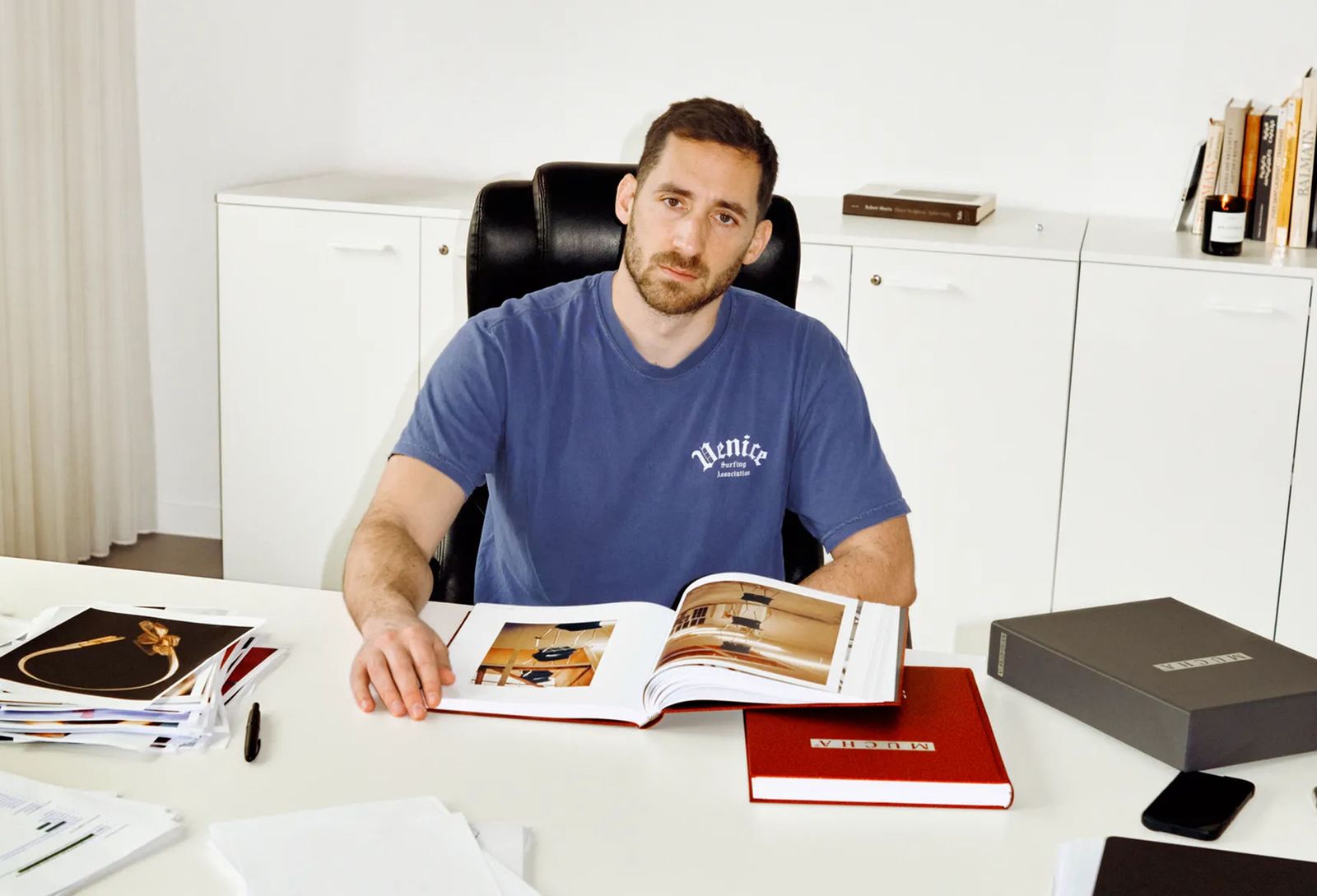
Antonin Tron, in his office at Balmain HQ. Photo: Lee Whittaker
Vogue: What led to the choice of Antonin Tron as creative director?
Matteo: After 14 years, deciding to part ways with Olivier [Rousteing, now the creative director of Rabanne] was, without question, among the hardest choices I've faced as CEO. Once that was settled, plenty of big personalities emerged — very interested, and I'd even say pushy — hoping to take over creatively. But choosing one of them would have meant repeating the same narrative, possibly at the brand's expense.
That's why we chose someone relatively unknown but full of potential. Someone genuinely, deeply drawn to the codes of Pierre Balmain, capable of reinterpreting them in a new way. Antonin's work centers entirely on the body. It's rooted in movement. It involves drapes, and all of it can be traced back to the Balmain archive. When he showed me his work, it became clear he was exactly the right person to help me on this path of reconnecting with the heritage while redefining the brand.
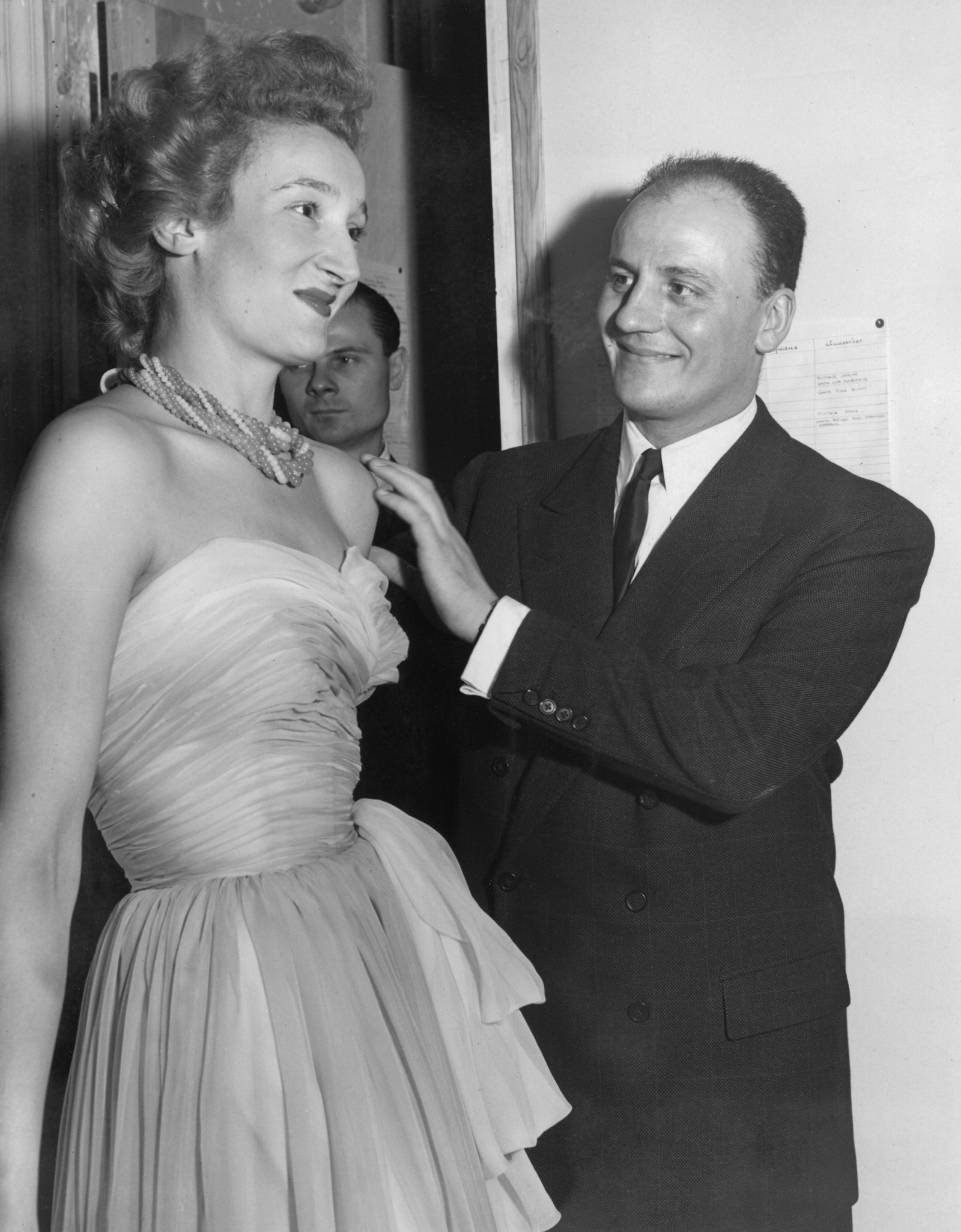
Sculpted silhouettes, fluid draping and a strong sense of movement defined Pierre Balmain's codes, which centred on the body. Photo: Getty Images
Vogue: Ahead of Antonin's debut at Balmain, Nicole Phelps interviewed him and, during that visit, spotted a dress in the studio from the archive, one she mistook for a piece from Antonin's collection. That same conversation saw Antonin flag accessories as an opportunity, though he admitted the category was new territory for him. So how are you guys developing your accessories?
Matteo: Ready-to-wear used to account for almost 90% of our income. So as we work to build out the full wardrobe, leather goods matter a great deal. In the end, it's the segment of the business that offers the most stability, since it shifts less over time. It can also help reposition the brand, signaling a new direction.
For Antonin's first show, we presented a bag called the Sphynx — a classic hourglass shape that's been performing very well so far, and we see the beginning of something.
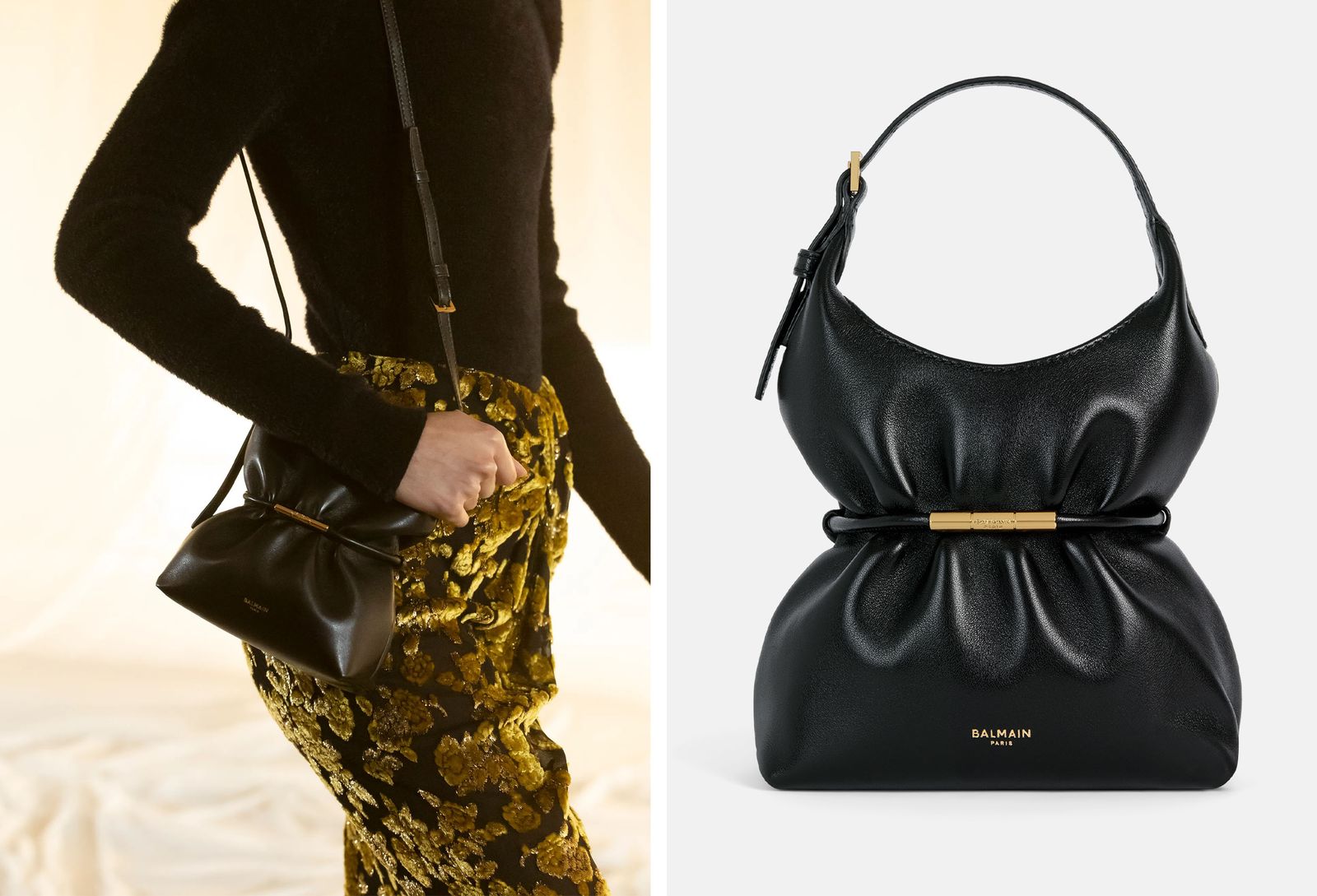
The Sphynx bag presented at Tron’s first show. Photos: Courtesy of Balmain
Vogue: There's a general agreement that a creative director's second show carries the most weight, given the additional time spent in the role. What guidance are you both giving Antonin for his second show?
Matteo: Right off the bat, that debut show was a major accomplishment, particularly given how limited his preparation time was. Back when we first talked about that initial show, I laid out three requests for him. First on my list was a show capable of forging a powerful connection to our heritage, since that had been central to my approach ever since I came on board; a moment with this much visibility felt like the right opportunity to reinforce that message.
My second request was for a show that would speak directly to our existing client base. Naturally, that customer has a very particular profile — she's a confident woman with a bold personality, self-assured and sexual, someone we describe as 'an unapologetic troublemaker'. I didn't want her to feel let down by the new direction. Lastly, I wanted the show to communicate a sharply defined vision to our wholesale and retail partners. He delivered brilliantly, since the show hit every mark.
The moment has come for him to push further. I'm pushing him toward boldness, encouraging him to build on what's already worked to express both himself and the brand more fully. My hope is that he approaches this with more enjoyment and less worry, now that the first show has been so well received.
Bruna: For us, everything centers on 'deepening'. It was clear to everyone that this show marked a reset. The next step is deepening that narrative. That's really where I come in — pushing Antonin to turn his vision into a tangible show. We've also put in significant work over these past months building a community around him. A strong team is now in place, dedicated to shaping and defining the brand's image.
Vogue: What can you share about the upcoming show? Has anything been revealed to you yet?
Matteo: I count myself fortunate since Antonin keeps me closely involved — from mood boards through to prototypes. Right before heading to Milan for our new store opening, I also got a look at the bag and shoe collection. A truck loaded with them was on its way from one of our Florence suppliers to Paris, carrying all the show samples. I was genuinely struck by it; bags and shoes are set to take center stage in this upcoming show.
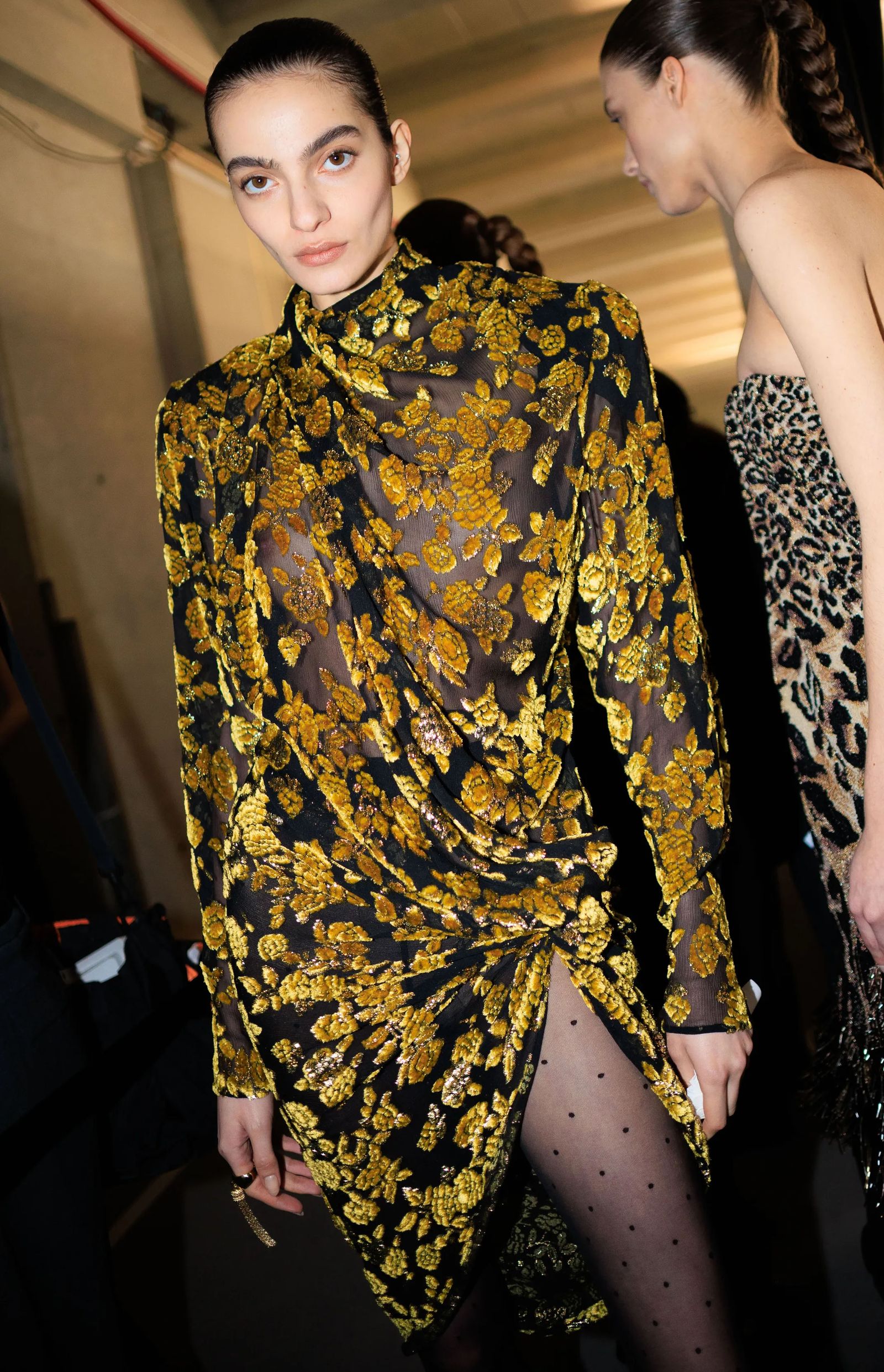
Behind the scenes at Antonin Tron's debut show. Photo: Acielle/ Style Du Monde
As for ready-to-wear, everything gets revealed to me the Monday before the show happens. We spend a full two hours together while Antonin walks me through the entire show collection. From what I've seen, his vocabulary has continued to evolve. That favorite principle of his is still there — 'minimal opulence' — but now carrying more sexiness, more boldness. Where the first show leaned heavily on the house's established codes, this one strikes me as more personal.
Vogue: A store just opened in Via della Spiga in Milan. Do further store openings form part of this transformation strategy?
Matteo: The goal is for retail to make up 70% of our business. For me, this is another key piece of the transformation journey, since Balmain hasn’t really had a retail culture before. It also reflects my own background, as I spent years working as a retail director.
With a transformation this large, there’s a risk that customers won’t follow it and will end up feeling disconnected. Our own spaces, our own stores, are the easiest place to walk them through that story. I picture the Balmain store as somewhere you encounter the house’s history, not simply a spot for transactions. The store on Via della Spiga opened, and yesterday we held an event there. We made a point of pairing an amazing blend of the new collection by Antonin with archival pieces from 1955, 1960, and beyond, showing how tied this new vision is to the brand’s heritage.
Meanwhile, our reliance on wholesale is being cut back. A lot of distribution has been closed. Being a small brand like ours means we can’t be present everywhere our clients are. We don’t have retail locations in Capri, Courchevel or St Barts. Wholesale is what lets us create those touchpoints for clients in places where we can’t open a store, but it has to be qualitative, respecting our brand positioning and our pricing.
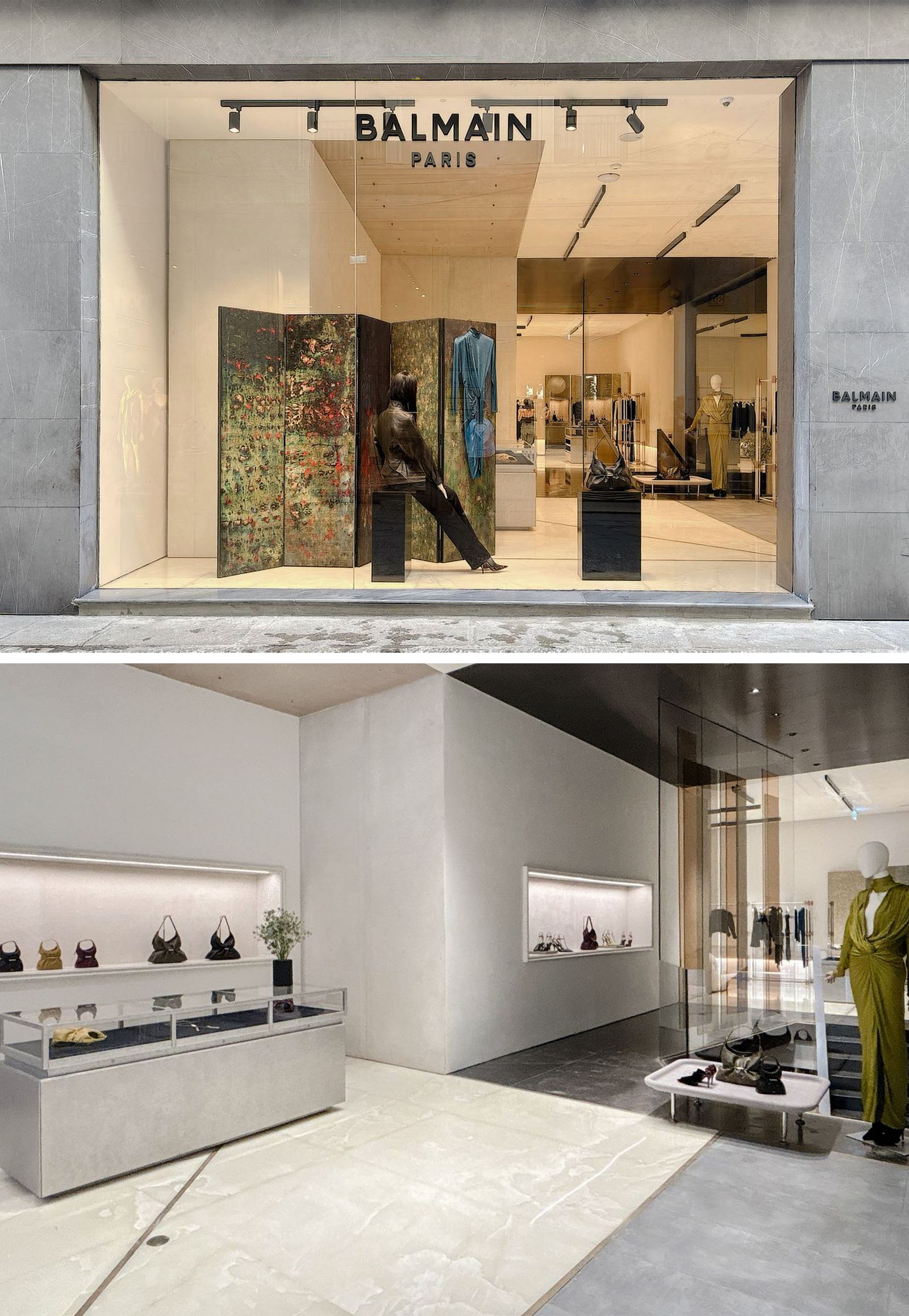
Balmain’s store in Milan’s Via della Spiga. Photo: Courtesy of Balmain
Vogue: Pricing has been a sore point across the industry in recent years. What can you share about your pricing strategy?
Matteo: From the start, our aim was to bring down the entry price in every category so aspirational customers could access the brand. Those aspirational clients had stopped buying because luxury prices kept climbing. So I said, let’s take a different approach: for each product category, let’s make sure our entry price sits below our competitors’. Take the Sphynx, for instance — a bag made with incredible leather quality in Italy, with a distinctive silhouette — the mini version has an entry price under €1,000. Our sneaker starts at €299, and the same holds true for T-shirts.
Naturally, style and design still can’t be compromised. A white T-shirt with a giant Balmain logo isn’t something you’ll find anymore; that era is done. It belonged to our past, not our future. Based on what we’re hearing from the stores so far, the strategy is working.
Vogue: Bruna, what’s the best way to communicate the less exciting parts of a strategy change like prices?
Bruna: Back when I first took this job, elevated aspirational pieces formed the basis of the marketing strategy. Beautiful pieces landed us plenty of magazine covers, yet those items never actually sold. That's why we pulled back from maximum visibility moments such as red carpets and covers, choosing instead to build day-to-day conversations around the brand. Every magazine, for example, runs beautiful product roundups, and if bags come up as the subject, I want us featured there.
There are also new tools and channels we need to engage with. How I position a bag like the Sphynx or the sneaker differs from what I do with a very elevated piece. We now have a wardrobe, and because of that, our campaign along with the content we create across social media platforms and other communication touchpoints needs to work in sync. Matteo, Antonin and I are all aligned on this.
Vogue: Is the Balmain army still a thing?
Bruna: Yes, it remains relevant. It's one of our greatest assets. While previously it may have centered more on a group of people featured in our campaigns, the focus has shifted slightly toward people who share the brand's values. Preserving this important element of connection with the women who represent our community is our responsibility.
Matteo: Antonin's first brief from me was simple: keep pleasing the incredible database of loyal customers we have. Naturally, though, that community keeps changing, which means we have to change along with it.