
'We're Out of Time': Nine Killed as Bahamas-Bound Learjet Plunges From 35,000 Feet Into Palm Beach County Roadway
Crew reported ice and turbulence moments before an overspeed dive; NTSB says the jet may have begun breaking apart before it struck Military Trail, leaving a crater, a half-mile debris field and 600 neighbors displaced
November 2, 2026

A dashcam video frame shows the Learjet plunging toward Military Trail in suburban West Palm Beach on Sunday, Nov. 1, 2026. (Dashcam image: Aki Kuusisto via Reuters)
Compiled Nov. 2, 2026, from public reporting and official statements available as of Monday afternoon, Eastern time. This is a developing story, and early details often change.
GREENACRES, Fla. — A business jet carrying nine people from Texas to the Bahamas dropped out of cruise flight over South Florida on Sunday afternoon. In little more than a minute it fell from about 35,000 feet and slammed nose-first into a busy Palm Beach County roadway. Everyone on board was killed, and the fireball left a smoldering crater a few feet from a mobile home community.
The Learjet 60, registration N722BD, crashed at about 12:50 p.m. EST on Nov. 1 on Military Trail, between Cresthaven Boulevard and 10th Avenue North in the Greenacres–Cresthaven area. That is roughly 4 miles south of Palm Beach International Airport and about 7 miles southwest of downtown West Palm Beach. U.S. Transportation Secretary Sean Duffy confirmed on X that all nine people aboard died and called the crash a "horrific tragedy."
At a Monday afternoon briefing in West Palm Beach, National Transportation Safety Board member Tom Chapman said the crew had reported ice and turbulence shortly before the jet entered what a pilot called an overspeed condition and began descending rapidly. Chapman also said investigators have some evidence the aircraft was breaking up before it hit the ground. He stressed that the investigation is in its earliest stages and declined to speculate on a cause.
Only one of the nine people killed has been publicly identified: the co-pilot, 20-year-old Nathalia Filgueiras of Boca Raton. Her family said she earned her pilot's license at 17 through a Palm Beach County public high school aviation program.
THE FLIGHT
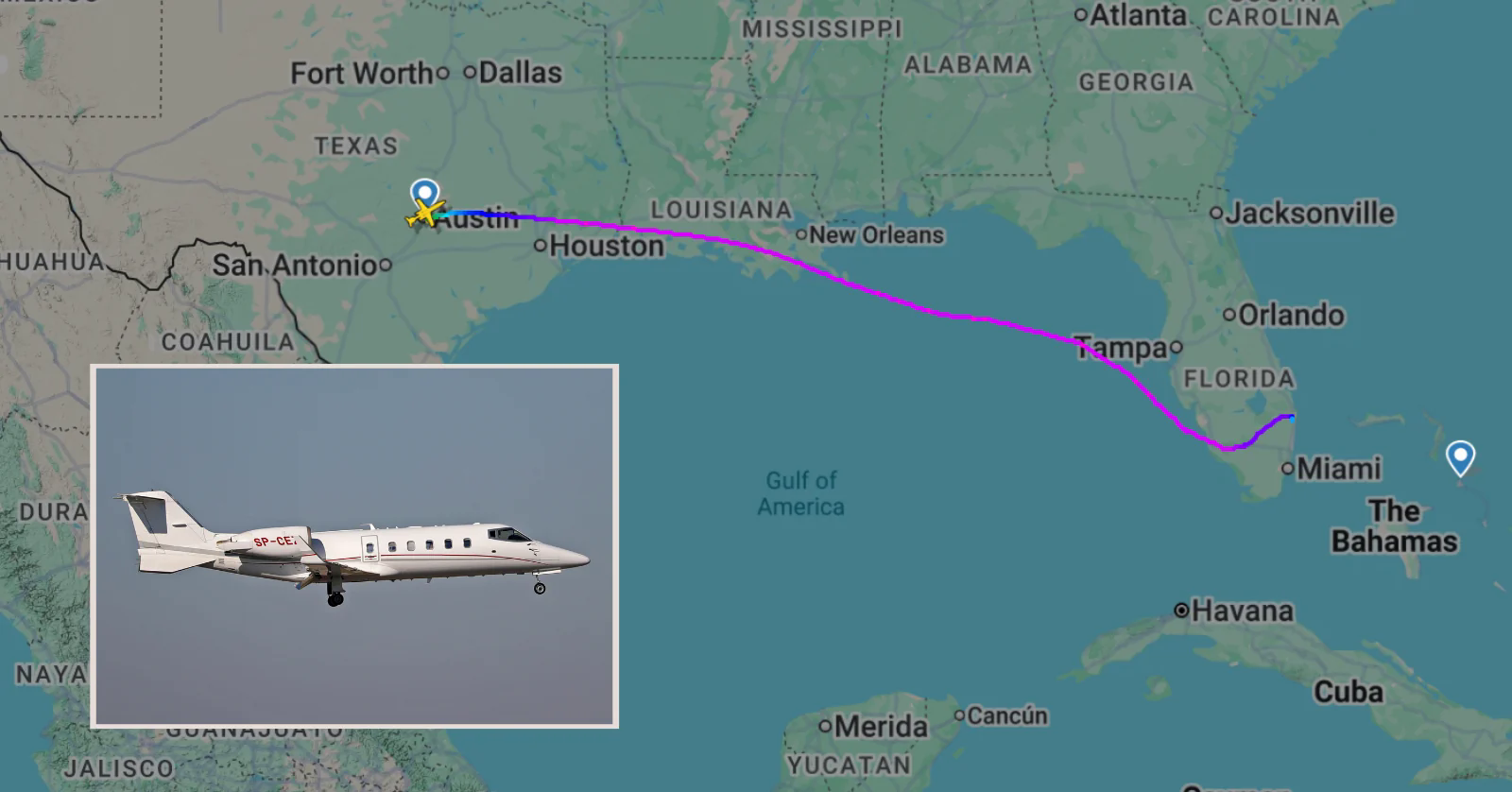
The aircraft was a twin-engine Learjet 60, manufacturer's serial number 60-271, built in 2004. That makes it about 22 years old. FAA registry records list the owner as LR60271 LLC, a company with a Wilmington, Delaware, address. The company's name repeats the jet's model and serial number, and the registry names no individual. Its current registration certificate was issued in January 2023 and runs through January 2030.
The NTSB said the flight was operated by Aurora Aviation, doing business as Upper Jet. The agency's investigation page uses "Upper Jet," and local reporting from CBS12 used "Upper Jets." AVweb reported that the NTSB confirmed the flight was conducted under Part 135, the federal rules for charter and on-demand commercial operations. IBTimes, citing FAA-derived data, reported that Aurora Aviation's Part 135 certificate is overseen by the FAA's Miami Flight Standards District Office and covers four aircraft: two Learjet 60s, a Learjet 60XR and a Dassault Falcon 50. IBTimes said that as of Monday morning the company had not released a public statement. No statement from the operator could be found in public reporting by Monday afternoon.
According to the NTSB, the jet left Austin-Bergstrom International Airport in Texas at about 10:37 a.m. Eastern time Sunday (9:37 a.m. in Austin). It was bound for North Eleuthera Airport in the Bahamas. Two flight crew members and seven passengers were aboard. Flight-tracking records cited by IBTimes show the jet had flown into Austin from Little Rock, Arkansas, the day before.
Jim Reynolds, a spokesperson for Austin-Bergstrom, told The Associated Press the jet was a private aircraft and that he could not immediately say who was on it.
Tracking data analyzed by Flightradar24 and others show the Learjet climbed to about 41,000 feet and flew east across the Gulf of Mexico. Near Naples it began stepping down toward 35,000 feet, and it was still eastbound at about 35,000 feet as it crossed the Florida peninsula toward the Atlantic coast.
THE FINAL MINUTES
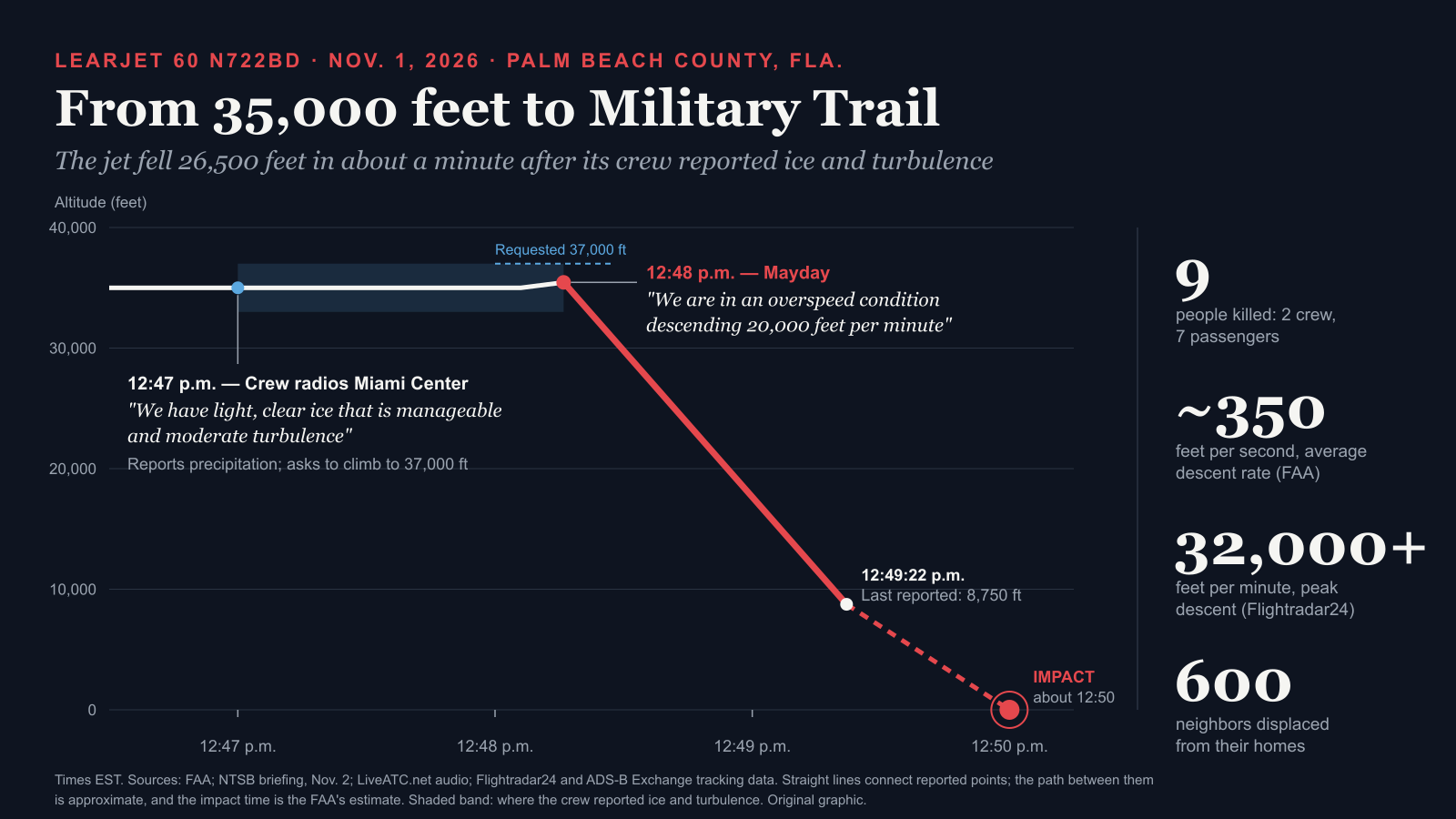
Air traffic control recordings captured by LiveATC.net, together with the NTSB's own account, describe a fast-moving emergency.
At about 12:47 p.m., the crew told controllers at the FAA's Miami Air Route Traffic Control Center that they were picking up "light, clear ice" that was manageable, along with moderate turbulence, according to the AP's account of the audio. Chapman said the crew reported altitude deviations of about 700 feet and an outside air temperature of minus 47 degrees Celsius (about minus 53 Fahrenheit). The crew then reported precipitation and asked to climb to 37,000 feet. Chapman said controllers approved the climb.
Less than 30 seconds later, the NTSB said, the crew radioed that the aircraft was descending, then declared a mayday. In the audio as reported by the AP and other outlets, a pilot reports a descent of 10,000 feet per minute. A pilot then reports an overspeed condition and a descent of 20,000 feet per minute, and says the jet is going to crash into the ground. About 30 to 35 seconds after the mayday, a final transmission ends with the words "We're out of time," according to CBS News and Aviation International News. Chapman said part of a transmission at about 12:48 p.m. was unintelligible.
Public reporting has not established which of the two pilots was flying or which one made the radio calls. The New York Times, as quoted by Yahoo News, reported that it was not clear who the other pilot was or who was at the controls.
The FAA told ABC News the jet fell from 35,250 feet to 8,750 feet in a little over a minute, about 350 feet per second. Flightradar24 data showed the descent rate peaking above 32,000 feet per minute. The jet's last reported altitude was 8,750 feet at 17:49:22 UTC (12:49:22 p.m. EST).
An independent analysis of ADS-B Exchange data published by BizJet Journal found a brief climb of about 450 feet above 35,000 feet at about 12:48 p.m., consistent with the requested climb. Within about 16 seconds the jet was descending at roughly 20,000 feet per minute. The analysis described a steepening, tightening right-hand spiral, with the jet's track swinging from about 100 degrees to 292 degrees in about 75 seconds, and no apparent recovery. The publication called its figures provisional. It said its trajectory angles are estimates and not measured pitch attitude, and it noted that its estimated speeds would exceed the Learjet 60's published maximum operating Mach number. None of these figures has been confirmed by the NTSB.
AVweb reported that investigators are also reviewing whether a turn toward Freeport, Bahamas, was directed by air traffic control or initiated by the crew.
IMPACT ON THE GROUND
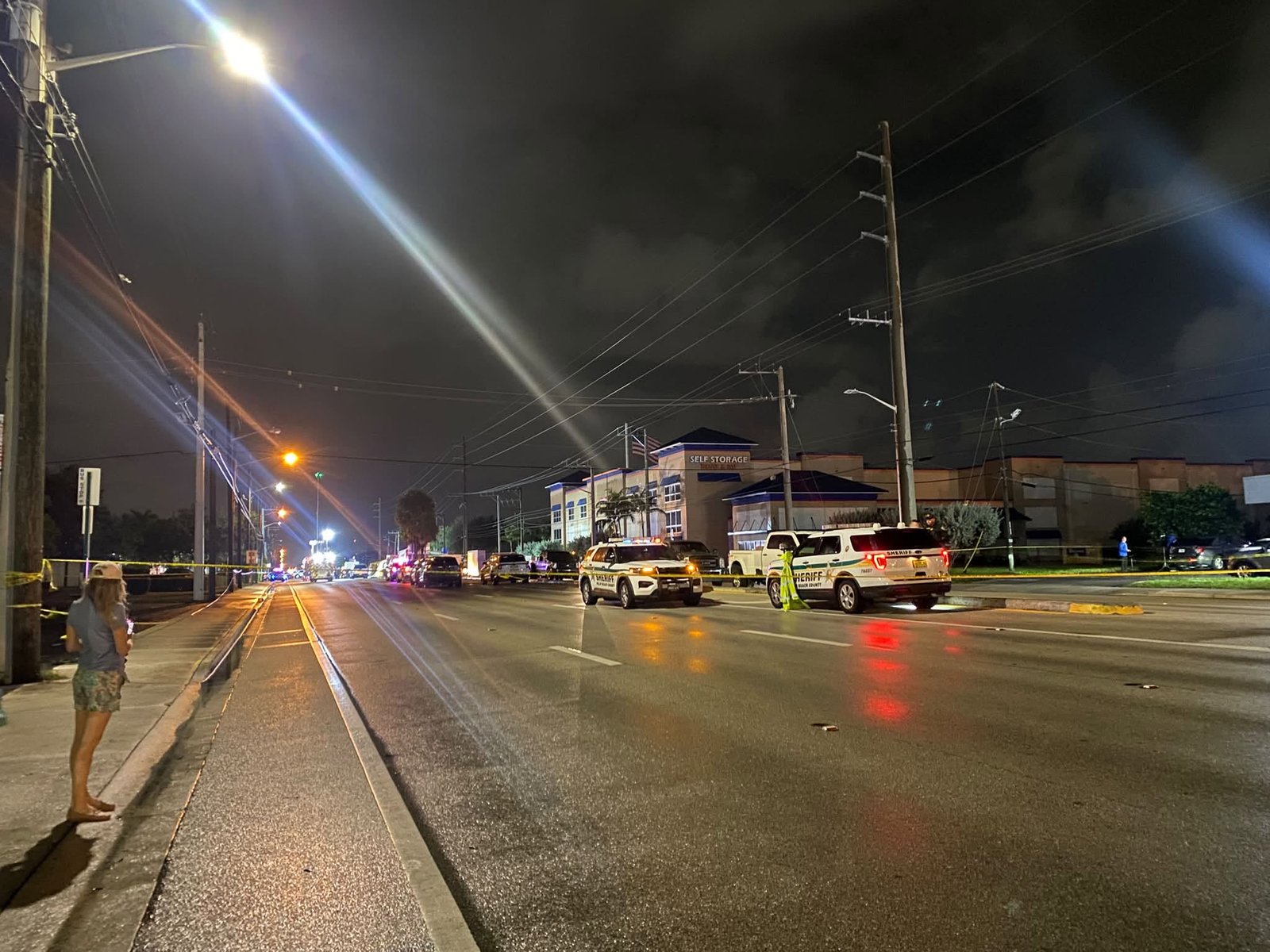
Dashcam and cellphone video taken by drivers on Military Trail shows the jet plunging at a steep angle, hitting beside the roadway and exploding. Witnesses told local and national news outlets the impact sounded like a missile or looked like a meteor strike. Thick black smoke rose over the neighborhood, and flames burned around broken pavement at the edge of the crater.
Florida Gov. Ron DeSantis spoke at the scene Sunday and called it a "cataclysmic plane crash." He said the jet looked like a missile going down and left a large crater beside the road, praised first responders and said debris had been thrown over a significant distance.
The crash hit hard in a dense, working-class corridor of strip shopping centers, homes and a mobile home community. Palm Beach County officials said about 600 residents of the nearby mobile home park had to leave because the site is being treated as a secured scene during the federal investigation. County Commissioner Joel Flores said officials were working to make sure the displaced residents had a safe place to stay. Palm Tran buses stood by to move residents, and by Monday evacuees had been taken to the Greenacres Community Center on Swain Boulevard, according to CBS12. Two shelters were opened.
The BBC, citing local officials, reported that the crash damaged power lines and water mains and that reopening the road could take a month or more. CBS12 reported officials saying the closure could last weeks. Palm Beach County closed Military Trail around the site to all but emergency vehicles until further notice. Detours ran along 10th Avenue North, Purdy Lane and Alameda Drive for east-west traffic and along Haverhill and Kirk roads for north-south traffic.
The School District of Palm Beach County closed nearby John I. Leonard Community High School on Monday. A nearby restaurant, Señor Lechón, said on social media that its employees and customers were safe but that it did not know when it would reopen.
Anthony Blackmon, who said he was about 500 feet away, told reporters that debris struck his house. Plumber Jason Valentine told CBS12 he saw a broken water main gushing into the crater, and said neighbors did not believe a plane had crashed until people came out of the trailer park carrying pieces of it.
Accounts of injuries on the ground changed overnight. On Sunday, DeSantis and county officials said they had no reports of anyone on the ground being hurt. On Monday, NTSB investigator Timothy Monville said a man in a vehicle leaving the area suffered a leg injury and that investigators plan to interview him. Wikipedia's summary of the crash, citing the NTSB briefing, lists one ground injury.
THE CO-PILOT

Filgueiras was identified by her family, not by authorities. Her father, Allan Filgueiras, confirmed her death to NBC 6. Her mother, Camila Corteleti, told the New York Post she was serving as co-pilot on the Austin-to-Bahamas trip. Her sister Giulia told NBC 6 the family is Brazilian and that Filgueiras learned to love flying from her father, who is a pilot. Brazil's Folha de S.Paulo also reported her Brazilian nationality.
CBS12 reported in October 2023 that Filgueiras, then a 17-year-old senior at West Boca Raton Community High School, had earned her private pilot certificate that September after starting ground school in 2020. The school district paid for the certificate through the school's aviation academy. NBC 6 and the AP reported that her license showed she was rated to fly the jet but not to serve as pilot in command.
Her stepfather, Thiago Corteleti, told the New York Post she had about 1,300 hours of flight experience. Her mother said she had been flying commercially for about nine months, would have turned 21 in January and hoped to fly for American Airlines but was too young to apply. Corteleti also said she texted her boyfriend about turbulence and ice roughly 10 minutes before the crash. That account comes from the family and has not been confirmed by investigators. The New York Times reported she worked for a private charter firm based in Fort Lauderdale.
The pilot in command and the seven passengers had not been publicly identified as of Monday afternoon. Authorities have not said who the passengers were, where they were from or why they were traveling to Eleuthera.
On Monday, All Souls' Day, Bishop Manuel de Jesús Rodríguez of the Catholic Diocese of Palm Beach celebrated a memorial Mass for the nine at Our Lady Queen of Peace Cemetery in Royal Palm Beach. He told mourners that even if their names were not yet known, God knows each one, according to CBS12.
THE INVESTIGATION
The NTSB is leading the investigation, which it has designated ERA27MA026, with support from the FAA. The agency sent a "go team" of about 20 investigators with expertise in aircraft structures and systems, flight recorders, weather and air traffic control. Monville is the investigator-in-charge. Chapman said representatives of the FAA and the aircraft's manufacturer will take part.
At Monday's briefing at the Palm Beach County Emergency Operations Center, Chapman said investigators have some evidence that the jet broke apart to some degree before impact. "We're still seeking to determine that," he said, according to AVweb. Investigators have not identified which pieces may have separated in flight or whether they include any part of the tail. Monville said the debris field is about half a mile by four-tenths of a mile and covers ball fields, businesses and homes. Some pieces may lie farther out.
Monville called the on-site work a several-day process. He said the biggest obstacle is recovering the main wreckage from the crater in the roadway, where water from broken lines has been collecting.
Chapman said aircraft maintenance records indicate a cockpit voice recorder was installed on the jet, but investigators do not yet know whether it was still aboard or whether it survived the impact. He said that data would be very important if it can be recovered. Public reporting reviewed for this story did not mention whether the aircraft carried a flight data recorder.
Chapman said investigators will look at the weather at the jet's altitude, at what the crew and air traffic controllers knew and when, and at what actions they took. He said it is too early to say whether the jet flew into an active thunderstorm or what role the co-pilot played in the emergency.
The NTSB asked anyone who finds debris to leave it in place and contact the NTSB or local authorities. It asked witnesses with photos, video or other information to email witness@ntsb.gov.
The NTSB does not determine probable cause at the scene. In major investigations it typically publishes a preliminary report of factual findings within about 30 days, and media reports said one is expected in that window. A final report with a probable cause typically takes 12 to 24 months.
WEATHER
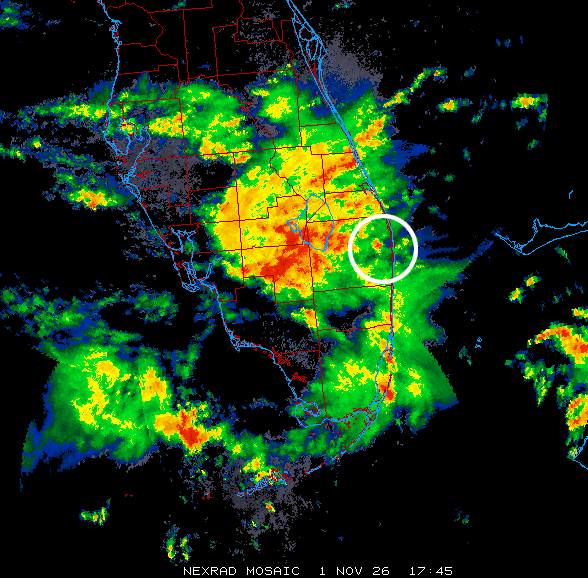
The crash came as storms moved across South Florida. AccuWeather reported thunderstorms with heavy rain and lightning in the Palm Beach area, with visibility of 2 to 10 miles and wind gusts of 20 to 30 mph. The National Weather Service had a flood watch for excessive rainfall in effect through Monday afternoon. CNN reported that the jet passed a stronger storm cell a few minutes before its descent. Whether that cell played any part has not been established.
The crew's reports of light clear ice and moderate turbulence at 35,000 feet are what the pilots radioed, not findings by investigators. The NTSB has said weather is a major focus but has drawn no conclusions.
THE AIRCRAFT TYPE
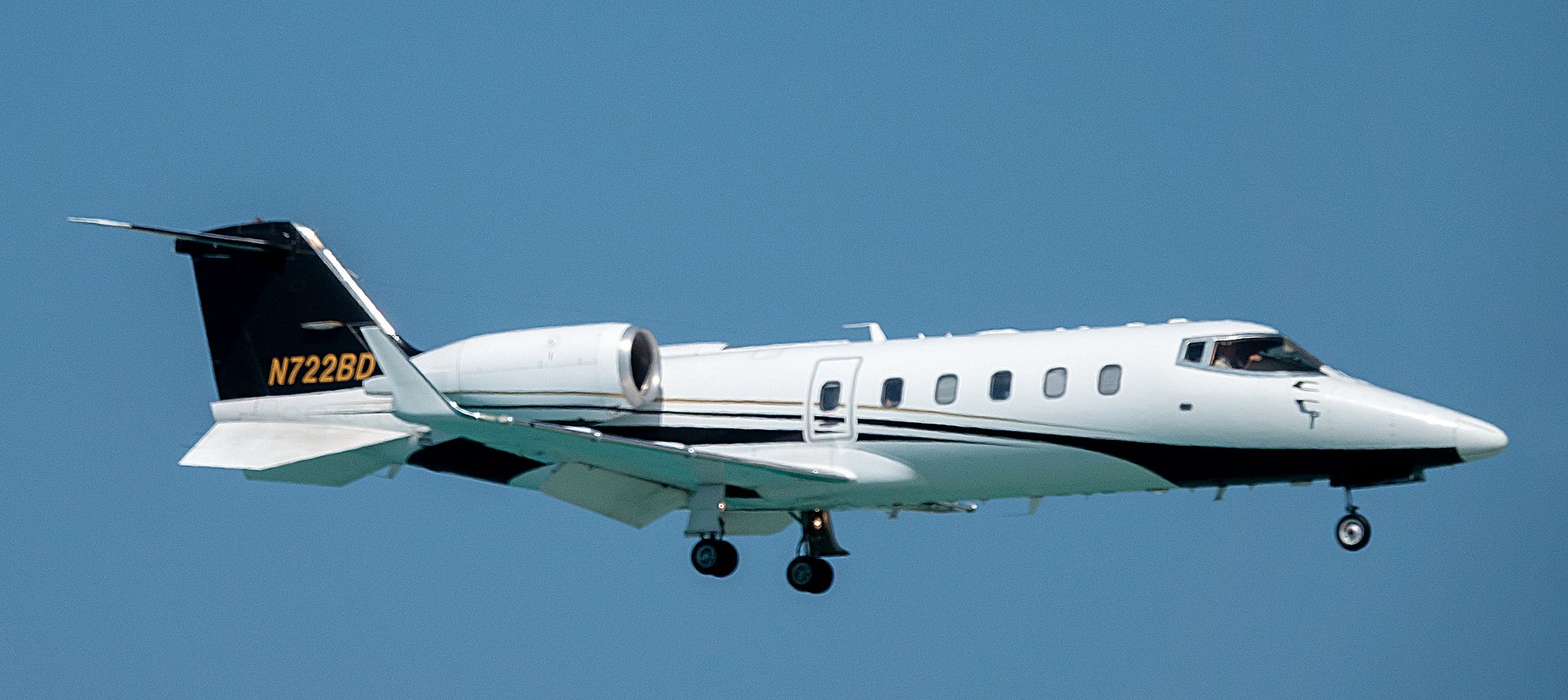
The Learjet 60 is a mid-size business jet. The FAA certified it in January 1993, and it entered service that year. It is powered by two rear-mounted Pratt & Whitney Canada PW305A turbofans rated at about 4,600 pounds of thrust each. It requires two pilots, typically seats up to eight passengers and has a range of roughly 2,400 nautical miles. Bombardier later built an upgraded model, the Learjet 60XR, with a newer flight deck.
CNN, citing Flight Safety Foundation data, reported that the Greenacres crash is the deadliest accident involving a Learjet 60. CNN also said its review of NTSB records makes this the second-deadliest U.S. aviation crash of 2026, after a June skydiving plane crash in Butler, Missouri, that killed 12. IBTimes reported that public NTSB records show no earlier accidents involving this tail number.
RUMORS AND OUTSIDE COMMENTARY
The crash site is about six to seven miles from Mar-a-Lago, President Donald Trump's estate, and Trump had left from the West Palm Beach airport a little more than an hour before the crash. Social media posts claimed the jet had been shot down. No official statement or evidence supports that claim, and the NTSB has described the crew's reports of ice, turbulence and an overspeed descent. A spokesperson for musician Lenny Kravitz called online reports that he was aboard "untrue," according to BocaNewsNow, as cited by AeroCorner.
Aviation experts interviewed by news outlets have offered possible explanations, including a loss of control after icing or turbulence at high altitude. Those are expert opinions, not findings. Mike Slack, an aviation attorney and pilot, told Austin television stations that a Learjet tends to go vertical and descend very fast if control is lost at altitude. Steve Arroyo, an aviation safety expert, told the AP that ice and turbulence could have caused a stall. The NTSB has not endorsed either view.
WHAT IS KNOWN, WHAT IS NOT
Investigators have the basic sequence: an eastbound charter jet at 35,000 feet in stormy weather, a crew report of light ice and moderate turbulence, a requested climb, then within seconds a mayday, an overspeed and a near-vertical spiral that ended about 77 seconds later on Military Trail. They also have evidence of a possible in-flight breakup, radar and ADS-B tracking data, air traffic control recordings and possibly a cockpit voice recorder.
They do not yet know why the jet left controlled flight. Several questions remain open. Investigators have not said whether the ice accumulation was worse than the crew believed, whether the aircraft entered convective weather, whether a mechanical, structural, flight-control or instrument failure was involved, or whether pilot inputs during the upset contributed. They have also not determined which parts may have separated before impact, or when. The identities of the pilot in command and the seven passengers, the purpose of the trip and the operator's account all remain unknown.
For the families of the nine and the hundreds of Greenacres residents still out of their homes, the answers will come slowly. The NTSB expects to spend several more days at the scene before taking the wreckage away for examination, and its preliminary report is likely weeks away. AM