
RJ Mitte's Performance as Walter White Jr. on 'Breaking Bad' Marked a Breakthrough for Disability Representation
October 14, 2026
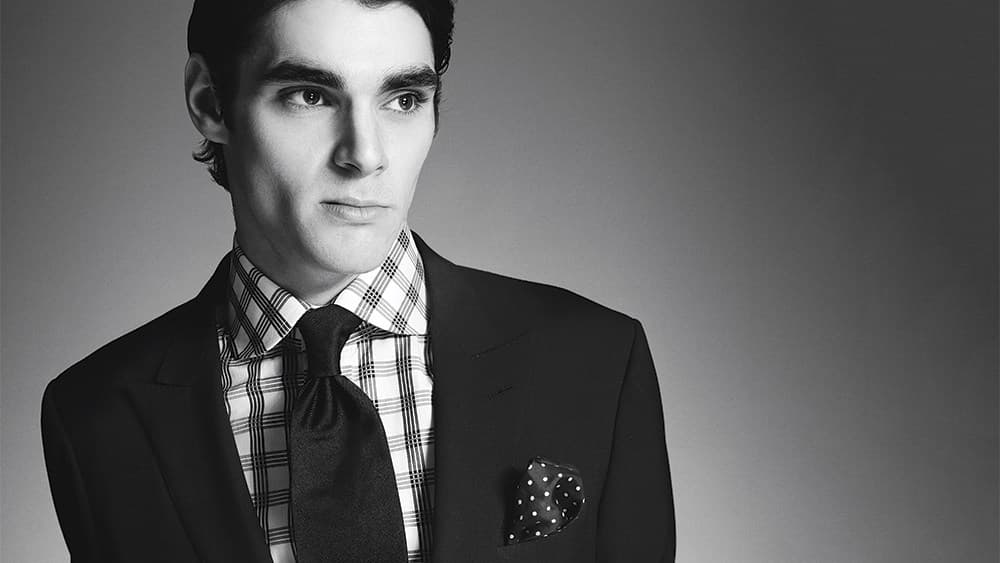
It's his acting talent that may come to mind first when remembering RJ Mitte — the manner in which, while still a young teen, he brought forth the deep and complete inner life of Walter White's son on "Breaking Bad," giving the show's criminal hijinks an underlying sorrow. There was also his advocacy work, discussing in interviews how his cerebral palsy diagnosis had not kept him from achieving a dream, while pushing for greater representation across the industry.
Mitte, who died Oct. 12 at only 34, broke into the industry in the most fortunate way: after doing some early acting work, he landed a role on “Breaking Bad,” a show that began as a flawed but promising pilot before becoming a cultural phenomenon over its run, and that continues to hold a powerful legacy — evidenced by the New York Times’ recent survey naming it the best TV show of the century.
Mitte did more than just occupy space in the show, though. He shaped the part of Walt Jr. into something distinctly his own, and across the series his arc mirrors his father's decline. While Walt Sr. (Bryan Cranston) gained momentum as a low-level drug kingpin, his innocently trusting son took joy in simply having him around, hoped he'd pull through, and failed to grasp why his mother (Anna Gunn) was getting in the way of the family's happiness. By the show's conclusion, once the elder White has seized violent command of narcotics trafficking throughout the American Southwest, Walt Jr.'s rejection of his father stands as nearly the only thing Walt Sr. remains capable of feeling. The moment Mitte's character wishes his father dead — after having so badly wanted him to survive earlier that season — stood out as a piece of acting excellence, proof of how fully "Breaking Bad" let Mitte inhabit the character over time.
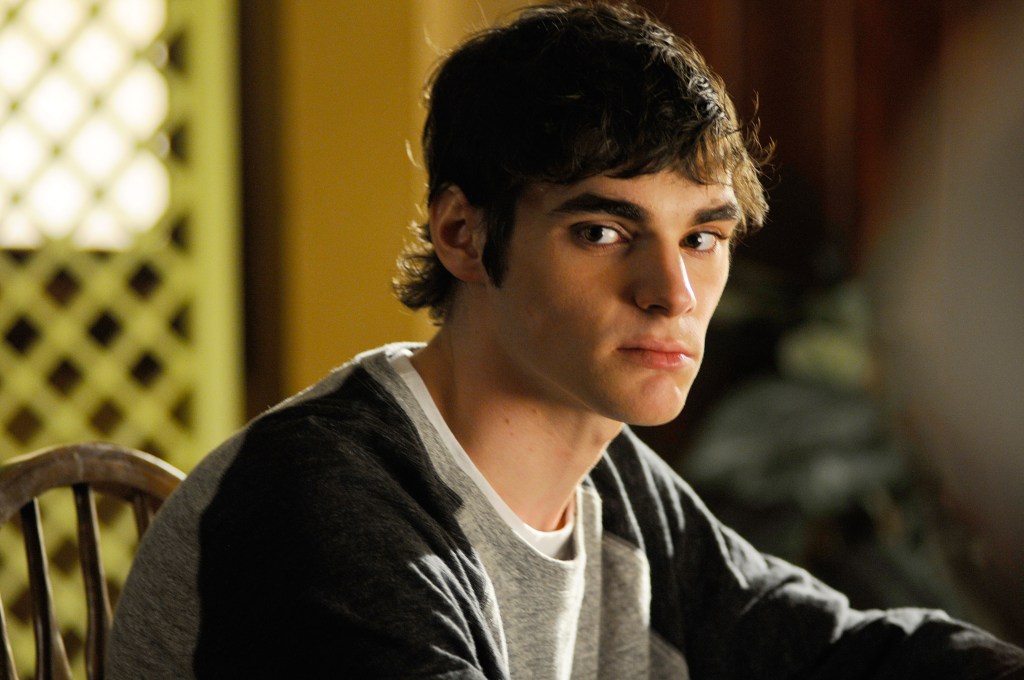
RJ Mitte ©AMC/courtesy Everett Collection
By the point of this final confrontation, Walt Jr.'s (and Mitte's) cerebral palsy had turned into something unremarkable. It was simply a fact about both young men, one the viewer registered but which defined neither. The younger Walt came across as loyal, or thwarted, or heartsick — or, for that matter, tall and strikingly handsome — long before he was anyone's notion of an object of pity. (In fact, his last exchange with his dad suggests he might have been twice the man his father ever was.) A 2008 profile of Mitte in the Los Angeles Times described the character as "just an everyday teenager who cracks jokes, takes the bus to school and gets busted for trying to score some beer. The effects of cerebral palsy are there — he uses crutches to get around, though in reality Mitte doesn't need them — but the words 'cerebral palsy' have yet to be mentioned on the show, nor have his parents made a single reference to his affliction or hardships."
Careful, thoughtful writing from creator Vince Gilligan’s “Breaking Bad” team deserves credit for that, but so does Mitte himself, who managed to balance the reality of his situation (a reality that, as the Times notes, he drew on to play Walt Jr.) with consideration of who else Walt Jr. might be. Here lay the power of something still rare now and rarer still in 2008, when “Breaking Bad” began: giving the role of a character with a disability to an actor who shares that disability. (The ABC sitcom “Speechless,” which ran 2016-2019 and starred Micah Fowler, who has cerebral palsy, telling the story of a tough, loving middle-class family and the complications they face, seems to me just one instance of a show that became possible because audiences responded so well to Mitte’s performance.) Off-camera, Mitte’s work kept illuminating what Hollywood could look like if it were as open as real communities are; on-camera, his work had already made that point clear across five seasons.
After “Breaking Bad” ended, Mitte kept working. As recently as this past stretch, he was promoting the film “Talking to Strangers,” available on VOD. One can't help but speculate about what else lay ahead for him. During a podcast appearance just last week, he weighed in on rumors that “Breaking Bad” could return with fresh episodes down the line. “If we came back,” he said, “I would want it better than ‘Breaking Bad’… And it's really hard. I set really high standards for myself that I can never meet. But I would really hope that if the show does come back for a sequel, it would raise the bar on a higher level.”
That sums up Mitte in essence — and it explains why what he accomplished so early in life still matters today.