
Tiny Monet With Unusual Backstory Sells for Over 20 Times its Estimate at Christie's Day Sale
November 20, 2026
It's the auction houses' flagship evening sales that grab the headlines, featuring artworks priced in the high eight figures and totals reaching into the high nine figures, sometimes nearing the billion-dollar mark during a strong market.
Yet real treasures occasionally turn up in the less prominent daytime sales of lower-priced materials. Experts told me, when I covered this for Artnet News in 2015, that these sales generate much of the houses' profit; dealers frequent them to build up inventory; they're far less curated than evening events; they may better reflect the true state of the market; and better deals can be found there.
Related Articles
Serious bidding wars can also erupt at these sales. The latest example came on Wednesday, involving a tiny artwork by a titan of French Impressionism.
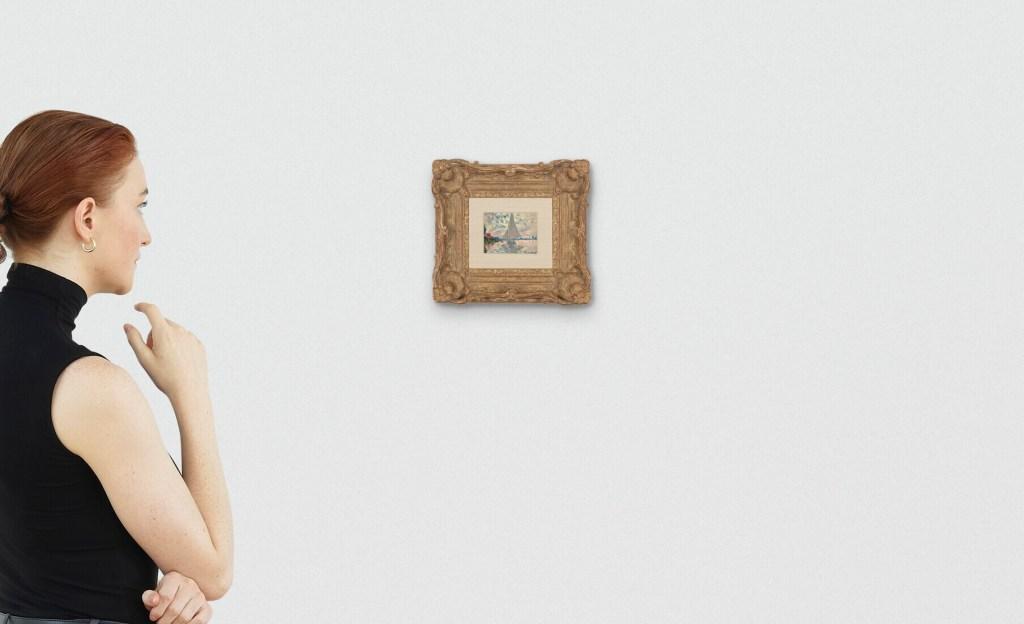
At Christie's Rockefeller Center saleroom, during a day sale of Impressionist and modern art, Claude Monet's La Barque (ca. 1874) carried an estimate of $300,000 to $500,000 but sold for just shy of $7 million. The modest estimate matched the painting's small scale—it measures only 2¾ by 3½ inches—meaning it sold for $722,285.71 per square inch.
According to the house, more than 20 bidders competed for the small panel, some present in the room and others on the phone with Christie's specialists; the bidding lasted six minutes and 45 seconds before Rachel White Young, head of the 20th-century evening sale, secured it for her client.
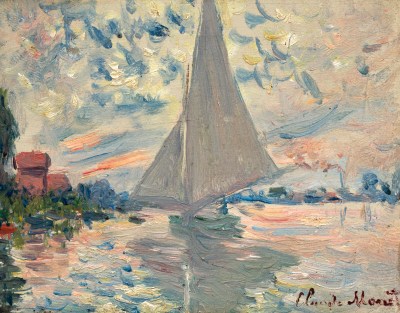
Claude Monet, La Barque (ca. 1874).
The painting carried an unusual backstory even before it made a bit of auction history on Wednesday.
The artist was commissioned to create it by Georges Petit, a Paris art dealer who collected and supported the Impressionists; a June 1902 article in the magazine L'Art Moderne described how the collector would carry around small, identically sized pieces of wood, distributing them to artists he admired. He'd offer 100 francs and ask that the small panel be returned as a finished painting. Camille Corot, Édouard Manet, Camille Pissarro, and Pierre-Auguste Renoir received the same offer, and all agreed.
These five pieces would all end up belonging to Thérèse and Frédéric Humbert, two figures notorious within French high society. Thérèse claimed that a fortune had been willed to her by Robert Crawford, an imaginary American millionaire whose life she supposedly saved. Against this imaginary fortune, the couple borrowed money, acquiring a grand home and, for two decades, standing at the heart of Parisian social life, until questions from bank officials and lawsuits from creditors tore apart the web of lies.
Interestingly, in 1902 the sale of their possessions ended up happening at Galerie Georges Petit, of all places. Galerie Bernheim-Jeune purchased it, and the piece stayed within that family's hands until 2013, when collectors Marlene and Spencer Hays acquired it at the Paris auction house Hôtel Drouot, paying a hammer price of €200,000. As a summer job, they had started out selling books door-to-door for Southwestern Company, and from there went on to manage the business and launch a clothing company.
Per their foundation, whenever they were asked to name the most enjoyable aspect of their lives, their answer was, "learning about art and building a collection that we treasure," though they'd also cite Sir Richard Attenborough's observation that art collectors are "simply its temporary, fortunate and delighted custodians." Among the artists represented in their collection were Pierre Bonnard, Edgar Degas, Henri Matisse, Amedeo Modigliani, and Édouard Vuillard.
True to what they'd said, they donated their collection to Paris's Musée d'Orsay in 2016. This stood as the largest foreign collection given since World War II, comprising roughly 600 masterworks spanning the late 19th and early 20th centuries. The following year he passed away, with Marlene surviving him.