
South Park Reboots as 'South America,' Ditches Trump Drama for Bike Gang Satire
September 18, 2026
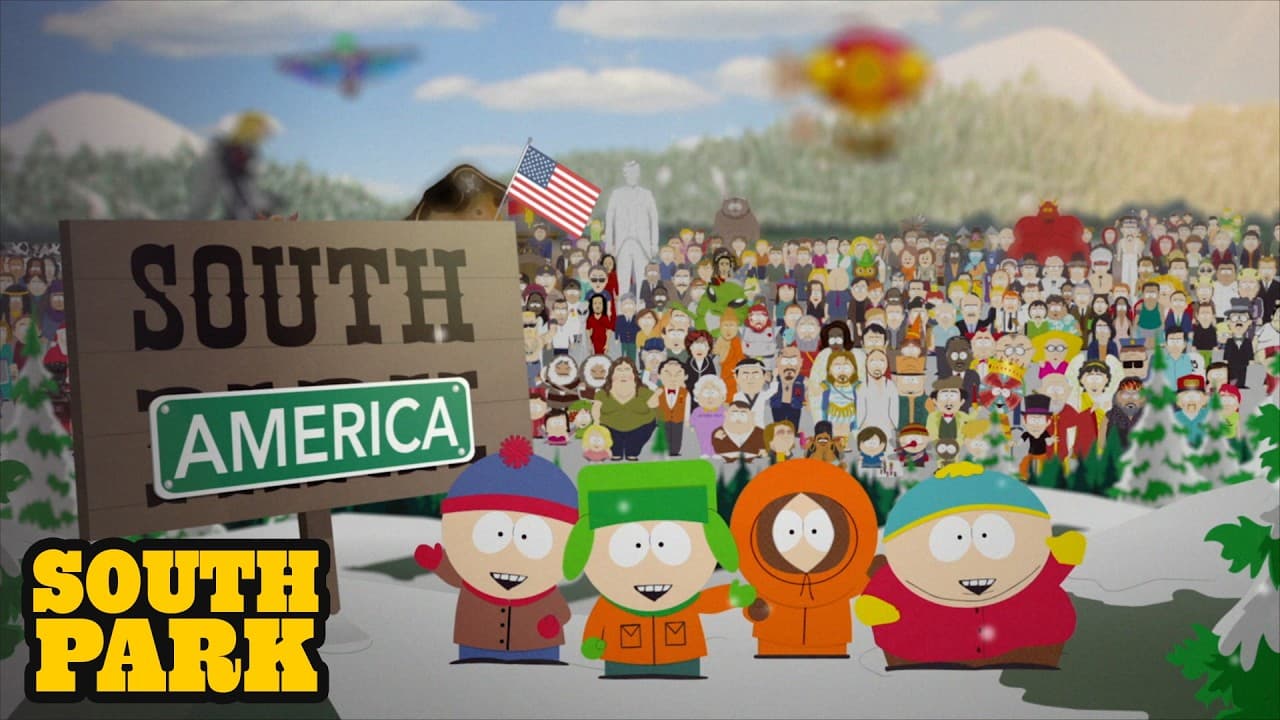
South Park, among television's most enduring comedy programs, made its debut on Comedy Central for season 29 following an unanticipated decision by creators Trey Parker and Matt Stone to rebrand the show as "South America"—a move framed as a promotional strategy but also a jab at President Donald Trump. The season premiere, which aired Wednesday evening, offered minimal exposition regarding the timing or rationale behind the fictional Colorado town's rebranding, yet it does present an oblique commentary on contemporary U.S. immigration policy.
The previous two seasons, 27 and 28, had moved away from the series' signature episodic structure in favor of serialized narratives centered on fictionalized White House events, featuring a storyline involving President Trump's secret romantic involvement with Satan. The new season appears to signal a return to the show's traditional approach—self-contained episodes that may still contain thematic continuity. Whether the satirical Trump character and his surrounding cast of administration figures and Vice President J.D. Vance will reappear remains unclear, though they do not feature in this standalone installment, which focuses exclusively on happenings within the town itself.
"Inspired by the bravery and patriotism of Apple and Google, we are changing the name of South Park to 'SOUTH AMERICA,'" Parker and Stone stated in a September 8 announcement unveiling the rebrand. One might reasonably have anticipated the premiere depicting Trump issuing an executive order to rename Lake Ontario to "Lake America" as a precursor to the town's renaming. Rather than this setup, the season commences after the name change has already been adopted—essentially embedding the joke directly into the narrative fabric, as townspeople matter-of-factly reference their community as "South America." A character makes a single allusion to the rebranding itself, and the moment is presented as generating tension within the community.
The premiere episode follows a conventional narrative structure that, characteristically for the series, conceals a commentary on contemporary social concerns beneath layers of provocative wordplay and innuendo. Eric Cartman fabricates instances of bullying at school to persuade his mother to purchase an e-bike for him—an adult-oriented vehicle that has become the must-have item for every young person in town. Liane Cartman, demonstrating her characteristic permissiveness, acquiesces, and Cartman soon uses the bike to terrorize residents across South America. Additional children acquire similar vehicles and begin causing destruction throughout town, crashing into establishments and alarming citizens—a clear metaphor for groups of immigrants moving into American towns.
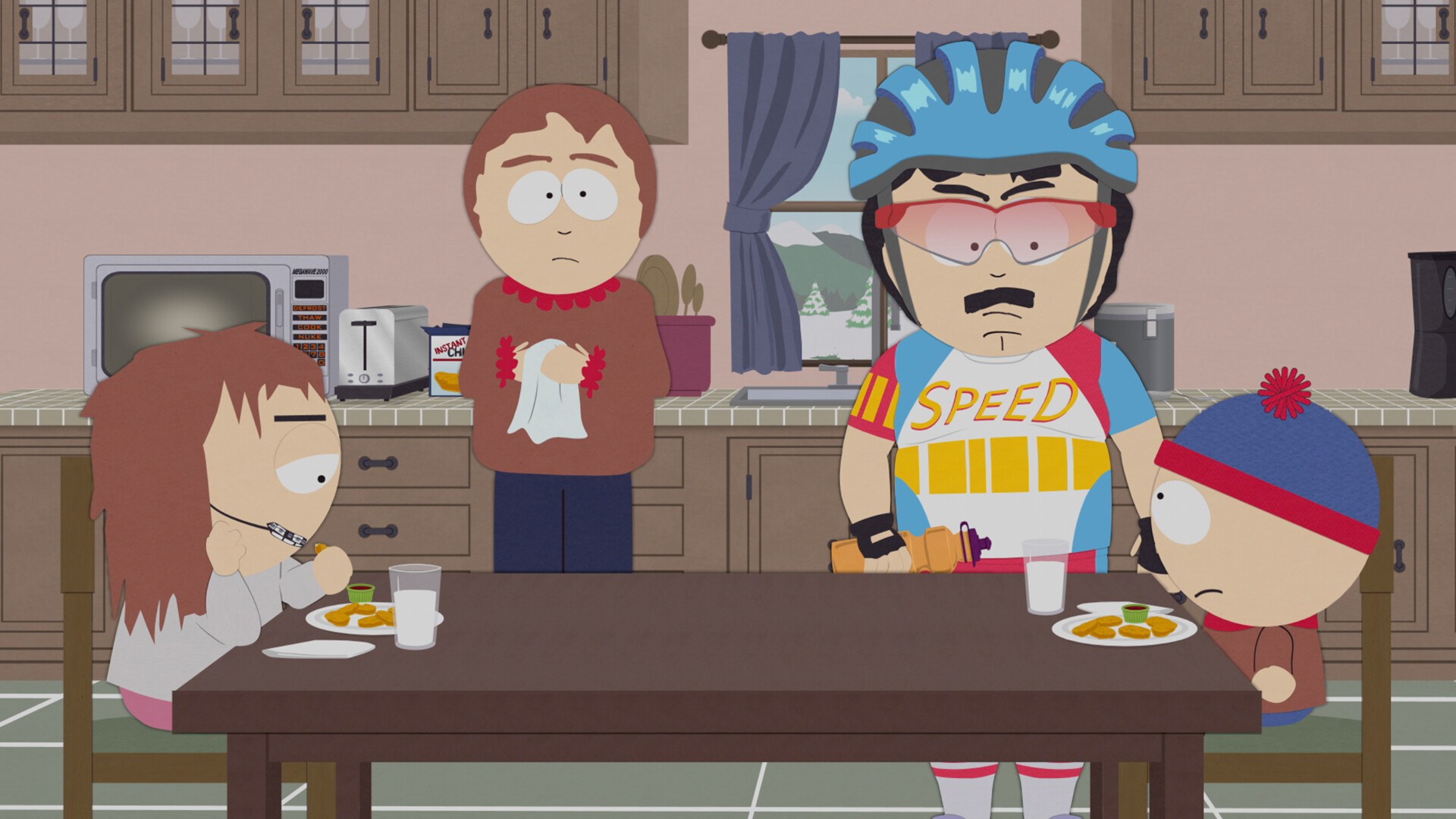
Early in the narrative, Kyle attempts to replicate Cartman's deception on his own mother but must first contend with his father, Randy, who arrives dressed in bright cycling attire and athletic shoes, now commuting via a traditional 10-speed bicycle in a bike lane increasingly dominated by youth on e-bikes. Randy assembles a collective of 10-speed riders who begin assaulting anyone obstructing their path. Their speed is unremarkable, however—a frustrated driver references the "old farts" impeding traffic. The gang functions as a representation of Immigration and Customs Enforcement as it traverses the town attempting to eliminate the e-bike youth.
As the juvenile e-bike riders are pursued by Randy's adult cycling collective, the episode accumulates satirical commentary directed toward corporations and public personalities who have aligned themselves with Trump's approach to governance. Google appears repeatedly throughout, generating search results for queries such as "How to get the laws changed in South America?" (with bribery presented as the solution) and "How can police respond to gang violence in South America?" (with extreme violence as the answer).
The episode additionally parodies the substantial cultural excitement surrounding Grand Theft Auto VI, the video game expected to release in November—serving as a stand-in for the forthcoming midterm elections, which progressive Americans view as an opportunity for transformative change. One character observes, "Hopefully, things will get better in November. That's when Grand Theft Auto Six comes out," while another adds, "Someone has to do something — we need to get these kids off the streets and back inside on their phones."
Parker and Stone have woven these symbolic narratives into the premiere, a stylistic choice representing a substantial departure from the prior season's disturbing White House plotlines. The central question moving forward concerns whether the creators intend to develop this metaphor across multiple episodes or if they will introduce additional social issues to satirize using their increasingly refined comedic approach.